


JNL Internal Lever-Actuated Connection Tool
Manual lever-actuated grip-and-seal connector for smooth straight tubes and bores up to 1000 psi.
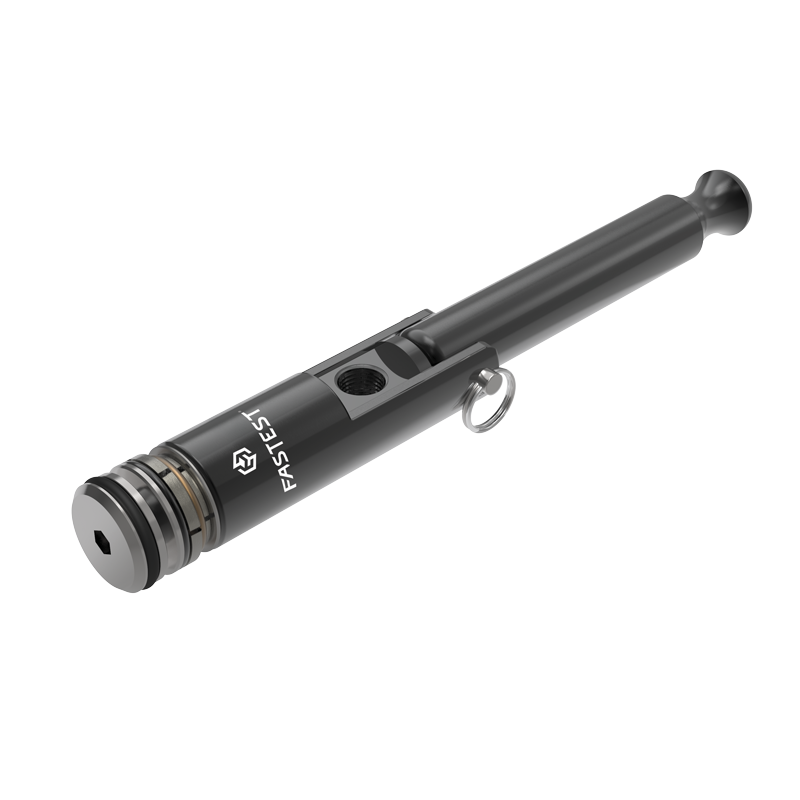
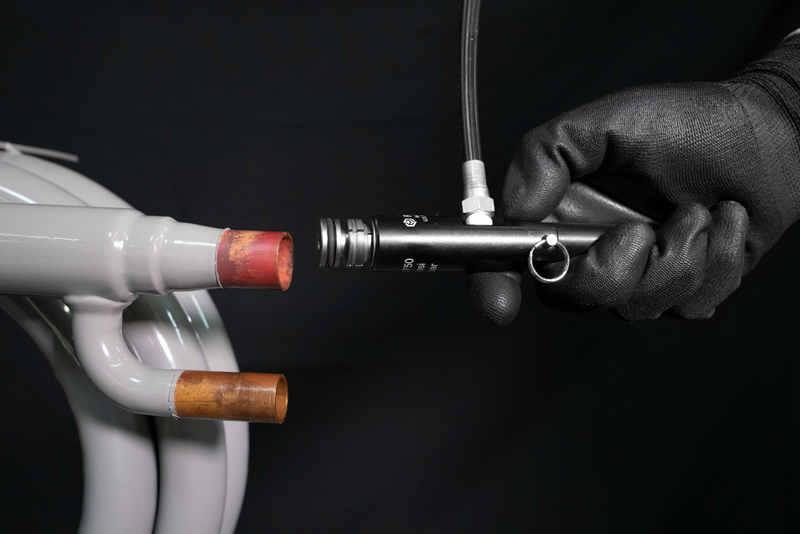
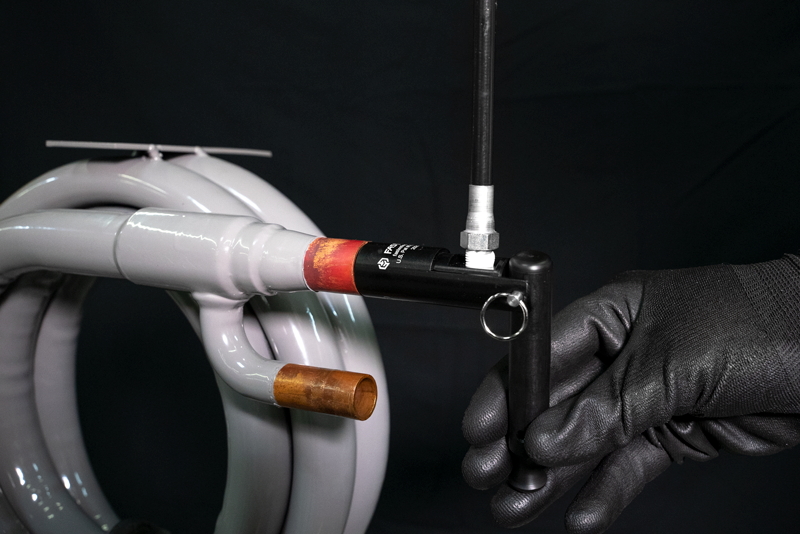
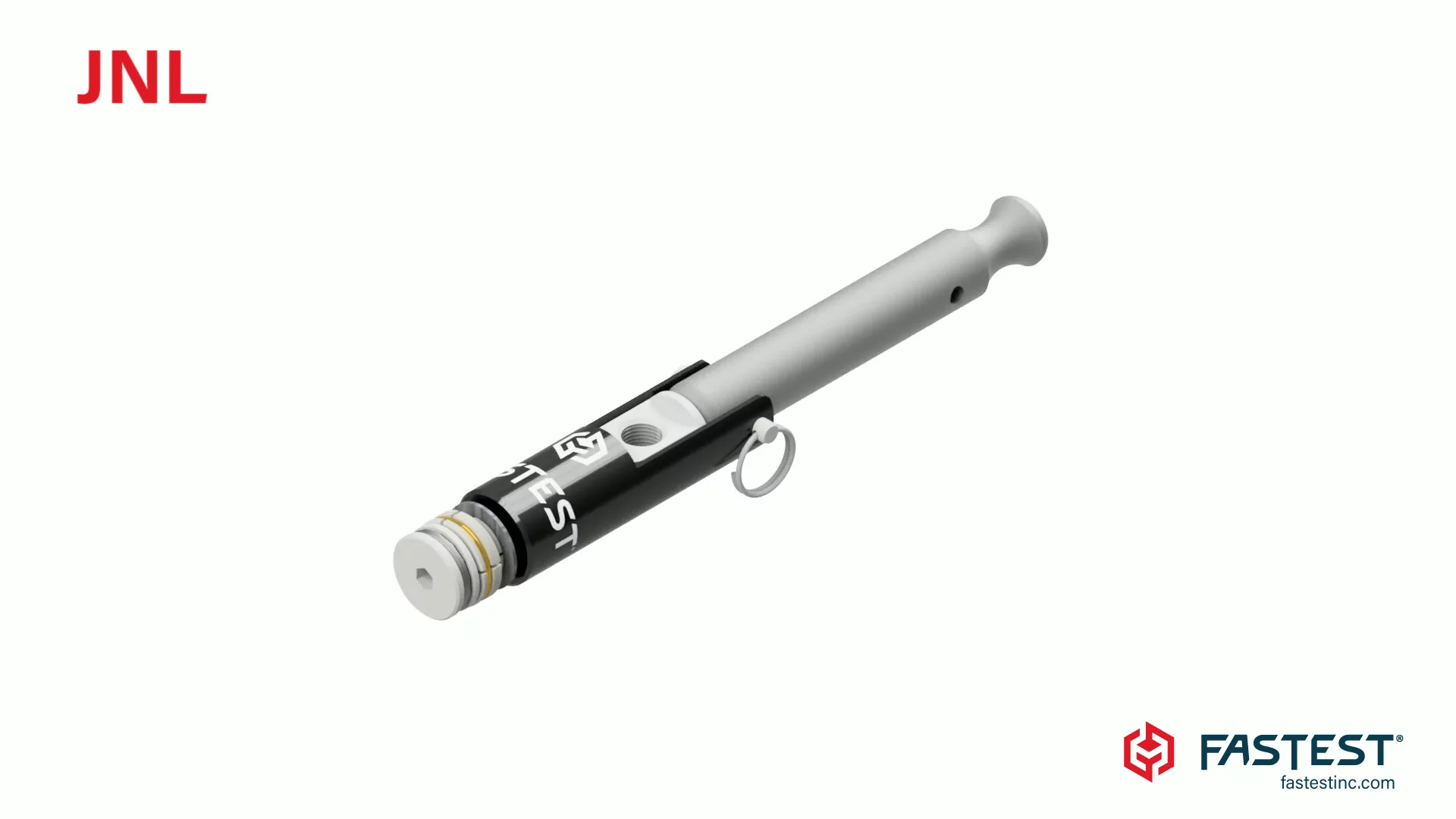
- Instant connections to copper, steel, and aluminum tubes used in refrigeration and industrial applications.
- Pressure assisted sealing, internal safety lock prevents accidental disconnection under pressure.
- Stainless steel collets provide maximum grip with minimum distortion of the test piece.
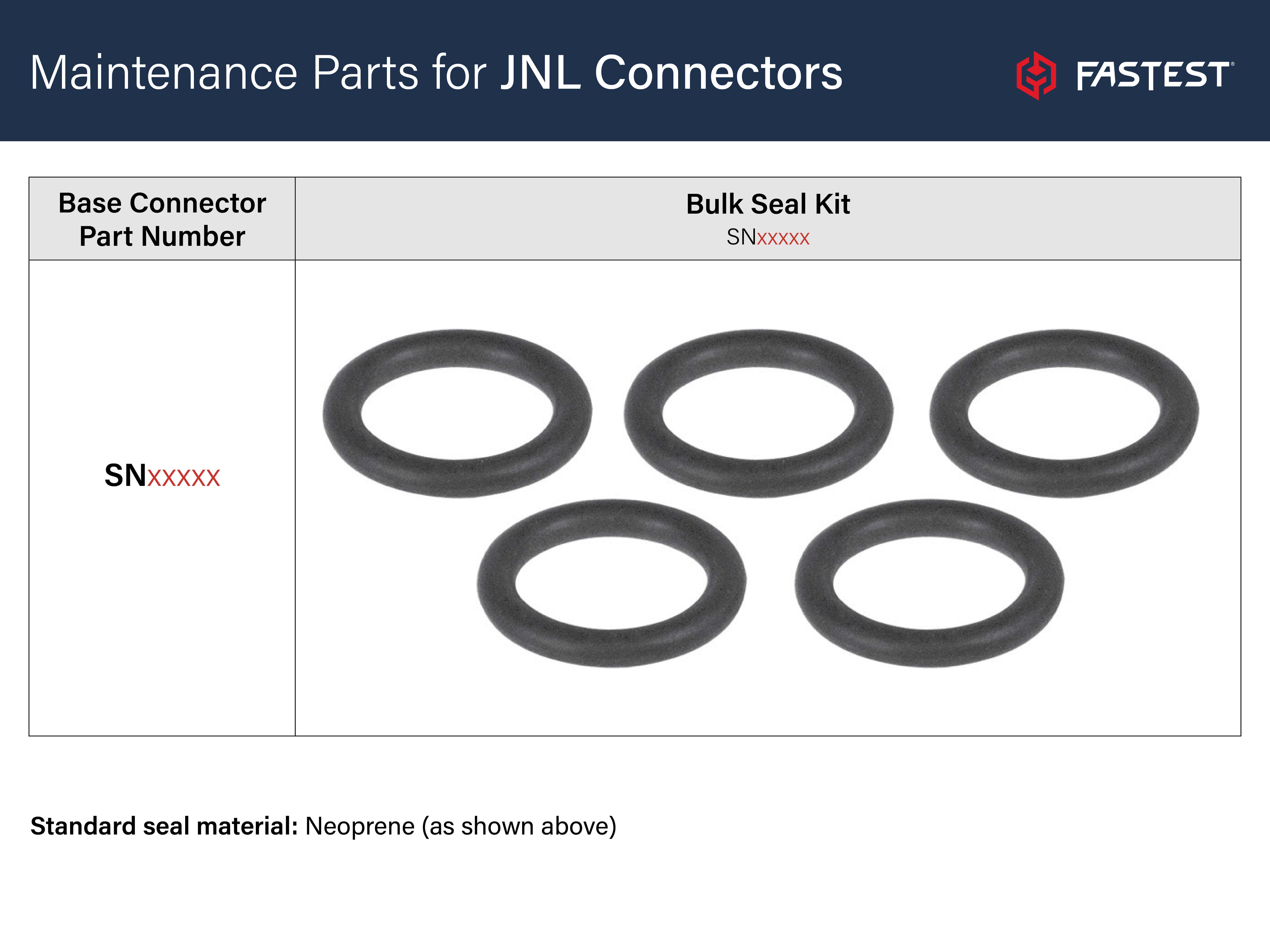
- Quick and easy seal replacement to minimize down time, maintenance and tool inventory.
JNL Datasheet: Click Here
JNL Operating Instructions: Click Here
JNL Main Seal Replacement: Click Here
JNL Rebuild / Repair: Click Here
Product Video: Watch Here
Similar Products
FI Internal Sealing Connection Tool
Pneumatic seal-only connector for fast leak-tight internal connections to tubes bores and threads in automated and semi-automated processes.
EZ Connect™ | ZN Internal Seal-Only Connection Tool
Manual seal-only connector for tubes and bores with wide tolerance variation in low-pressure applications.
The Lever-Actuated Internal Connector With a Safety Lock
The FasTest JNL is a lever-actuated internal connector that seals inside holes, bores, and tube ends — straight, swaged, expanded, and flared — in copper, steel, and aluminum. One pull of the lever makes a leak-tight connection from the inside, with no fitting to install and no tube preparation, across a range that starts at 10 millitorr of vacuum.
An internal connection has a particular problem that an external one does not: pressure acts to push the connector out of the bore. The harder the test, the harder the system works to eject the tool. The FasTest JNL answers that directly — pressure-assisted sealing energises the seal as pressure rises, and an internal safety lock prevents accidental disconnection under pressure, so the connection cannot be released while the system is energised.
Gripping from the inside brings its own balance to strike. The connector has to expand against the bore wall firmly enough to hold, but copper and aluminum tube deform easily, and a connector that grips too aggressively distorts the part from within. The JNL’s stainless steel collets are built for that trade-off, providing maximum grip with minimum distortion of the test piece.
Pressure capability varies with size: the FasTest JNL is rated to 1,000 psi (68.9 bar) for bores from .31 to .875 in (7.87 to 22.2 mm), and to 750 psi (51.7 bar) for the larger .875 to 1.625 in (22.2 to 41.3 mm) range. Its external counterpart is the JXL, which makes the same lever-actuated connection on the outside of a tube.
The Problem the FasTest JNL Solves
Sealing inside a bore for pressure testing creates a set of problems that do not arise on an external connection:
- Pressure works to eject the connector: On an internal connection, test pressure pushes outward against the tool, trying to force it out of the bore. Any connector that is merely wedged or friction-fitted becomes less secure as the test gets harder — exactly the wrong direction.
- Grip and distortion pull against each other from the inside: Holding a connection at 1,000 psi requires firm expansion against the bore wall, but soft copper and aluminum tube bulges or deforms if that force is applied poorly — damaging the part the test is meant to validate.
- Internal geometry varies: A line may present plain holes and bores alongside straight, swaged, expanded, and flared tube ends. Matching a dedicated plug to each geometry multiplies tooling and slows changeovers.
- Seal service becomes downtime: Seals are consumables. If replacing one is slow, or means pulling a spare tool from stock, the cost lands as both downtime and inventory across a fleet of connectors.
The FasTest JNL addresses all four: pressure-assisted sealing turns test pressure into sealing force, an internal safety lock prevents disconnection while pressurised, stainless collets grip with minimum distortion, and one tool covers holes, bores, and four tube-end geometries with seals that replace quickly.
Key Features
Pressure-Assisted Sealing With an Internal Safety Lock
This is the FasTest JNL’s defining pair of features, and they work together. Pressure-assisted sealing means rising test pressure energises the seal further rather than working against it — so the connection seals more firmly as the test intensifies. The internal safety lock then prevents accidental disconnection under pressure, making it impossible to release the connection while the system is still energised. Rather than relying on the operator to confirm the system is depressurised, the tool removes the unsafe action from their options.
Instant Connections to Copper, Steel, and Aluminum Tubes
The FasTest JNL connects to the copper, steel, and aluminum tube and bore geometries used throughout refrigeration and industrial applications. The connection is made from the inside, on the part as it comes off the line, with no fitting to install and no bore preparation — so operators move from part to part at production speed.
Stainless Steel Collets — Maximum Grip, Minimum Distortion
The JNL’s stainless steel collets expand against the bore wall to hold the connection, and they are engineered to provide maximum grip with minimum distortion of the test piece. That balance matters particularly on an internal connection, where the gripping force acts outward on a thin wall — too much and the tube bulges or goes out of round, damaging the part the test is meant to validate. Stainless construction also holds its grip characteristics through the repeated cycling of a production environment.
Quick and Easy Seal Replacement
Seals on the FasTest JNL replace quickly and easily, minimising downtime and maintenance effort. It also reduces tool inventory: because a worn seal can be changed rather than swapping the whole connector out of service, fewer spare tools need to be held to keep a line running.
Technical Specifications
| Specification | Detail |
|---|---|
| Product Type | Internal, lever-actuated connector for holes, bores, and tube ends. |
| Connects To | Holes/bores | straight tube | swaged tube | expanded tube | flared tube. |
| Tube Materials | Copper, steel, and aluminum tubes used in refrigeration and industrial applications. |
| Max Pressure Rating | 10 mTorr (micron) to 1,000 psi (68.9 bar) for .31–.875 in (7.87–22.2 mm); 10 mtorr (micron) to 750 psi (51.7 bar) for .875–1.625 in (22.2–41.3 mm). |
| Vacuum Capability | Down to 10 millitorr (micron) across both size ranges. |
| Actuation Method | Lever handle. |
| Actuation Type | Internal bore | tubes. |
| Sealing | Pressure-assisted — rising test pressure energises the seal. |
| Safety | Internal safety lock prevents accidental disconnection under pressure. |
| Grip Method | Stainless steel collets — maximum grip with minimum distortion of the test piece. |
| Seal Service | Quick and easy seal replacement to minimise downtime, maintenance, and tool inventory. |
| Related Products | JXL — the external counterpart, lever actuated to 1,000 psi; FI — internal seal-only to 120 psi; EZ Connect™ ZN — internal wide-tolerance seal-only under 50 psi. |
| Documentation | JNL datasheet, operating instructions, main seal replacement, and rebuild/repair instructions, plus a product video. |
Where the FasTest JNL Is Used
Refrigeration Tube and Bore Leak Testing
The FasTest JNL seals inside the copper, steel, and aluminum tube used throughout refrigeration assemblies for leak and pressure testing. The stainless collets hold at test pressure while keeping distortion to a minimum — which matters when the tube being tested is the finished product.
Evacuation and Charging
With vacuum capability down to 10 millitorr (micron), the FasTest JNL handles system evacuation as well as pressure work. One connector covers evacuation and charging alongside testing, rather than requiring separate tooling for the vacuum end of the process.
Machined Bore and Port Testing
Because the JNL connects to plain holes and bores as well as tube ends, it suits leak testing of machined components where the test port is simply a bore — no thread, no flare, no fitting. The internal seal engages directly against the bore wall.
Industrial Tube Assembly Testing
Across general industrial tube work, the FasTest JNL provides a fast, repeatable internal connection to straight, swaged, expanded, and flared tube ends — with the safety lock giving operators a connection that cannot come apart while the assembly is under pressure.
FasTest JNL vs. a Mechanical Expanding Test Plug
| Mechanical Expanding Test Plug | FasTest JNL | |
|---|---|---|
| Disconnection Under Pressure | Can be ejected if not separately restrained | Internal safety lock prevents disconnection |
| Sealing Behaviour | Seal force set mechanically, fixed | Pressure-assisted — seals harder as pressure rises |
| Bore Distortion | Expanding plugs can bulge thin-wall tube | Stainless collets — max grip, min distortion |
| Connection Time | Screw or expand the mechanism each cycle | Seconds — one lever motion |
| Geometry Coverage | One plug per bore size and type | Holes, bores, straight, swaged, expanded, flared |
| Deep Vacuum | Often limited | Down to 10 millitorr (micron) |
| Seal Service | Replace the whole plug | Quick seal replacement, less tool inventory |
| Repeatability | Varies with operator technique | Consistent lever-actuated connection |
Frequently Asked Questions
Q: What is the FasTest JNL?
A: The FasTest JNL is a lever-actuated internal connector that seals inside holes, bores, and tube ends — straight, swaged, expanded, and flared — in copper, steel, and aluminum. It uses pressure-assisted sealing and an internal safety lock that prevents accidental disconnection under pressure.
Q: What does the FasTest JNL connect to?
A: Holes and bores, plus straight, swaged, expanded, and flared tube ends — sealing from the inside, with no fitting to install and no bore preparation required.
Q: What is the pressure rating of the FasTest JNL?
A: It varies by size. The JNL is rated from 10 mtorr (micron) of vacuum to 1,000 psi (68.9 bar) for bores from .31 to .875 in (7.87 to 22.2 mm), and from 10 mtorr to 750 psi (51.7 bar) for the larger .875 to 1.625 in (22.2 to 41.3 mm) range. Confirm the rating for your specific size when specifying.
Q: What is the internal safety lock?
A: It is a mechanism that prevents the JNL from being disconnected while the system is under pressure. On an internal connection, pressure acts to push the connector out of the bore, so the lock removes the possibility of an accidental release while the assembly is still energised.
Q: Why does pressure-assisted sealing matter on an internal connection?
A: Because pressure would otherwise work against the connection, pushing the tool out of the bore. Pressure-assisted sealing converts that force into sealing effort instead, so the seal engages more firmly as test pressure rises rather than becoming less secure.
Q: How do the stainless steel collets prevent tube distortion?
A: The collets expand against the bore wall to hold the connection, and are engineered to deliver maximum grip with minimum distortion of the test piece. That balance matters on an internal connection because the gripping force acts outward on a thin wall — too much and the tube bulges or goes out of round.
Q: What tube materials can the FasTest JNL be used with?
A: Copper, steel, and aluminum tubes of the kind used in refrigeration and industrial applications.
Q: How are the seals replaced on the FasTest JNL?
A: Seal replacement is quick and easy, and is designed to minimise downtime and maintenance. Because a seal can be changed rather than swapping the whole tool out of service, fewer spare connectors need to be held in inventory. Main seal replacement and rebuild/repair instructions are available for download.
Q: What is the difference between the FasTest JNL and the JXL?
A: They are counterparts. The JNL seals from the inside — into holes, bores, and tube ends. The JXL seals on the outside of a tube. Both are lever actuated and both are rated to 1,000 psi (69 bar) at their standard sizes. Choose the JNL when the connection point is an internal bore or tube ID, and the JXL when it is the outside of the tube.
Q: What is the FasTest JNL used for?
A: Leak testing, pressure testing, evacuation, and charging of tube assemblies and machined bores — primarily in refrigeration and HVAC-R manufacturing, and in general industrial applications where an internal connection needs to be fast, repeatable, and gentle on the part.