Frequently Asked Questions
What HVAC-R applications does FasTest support?
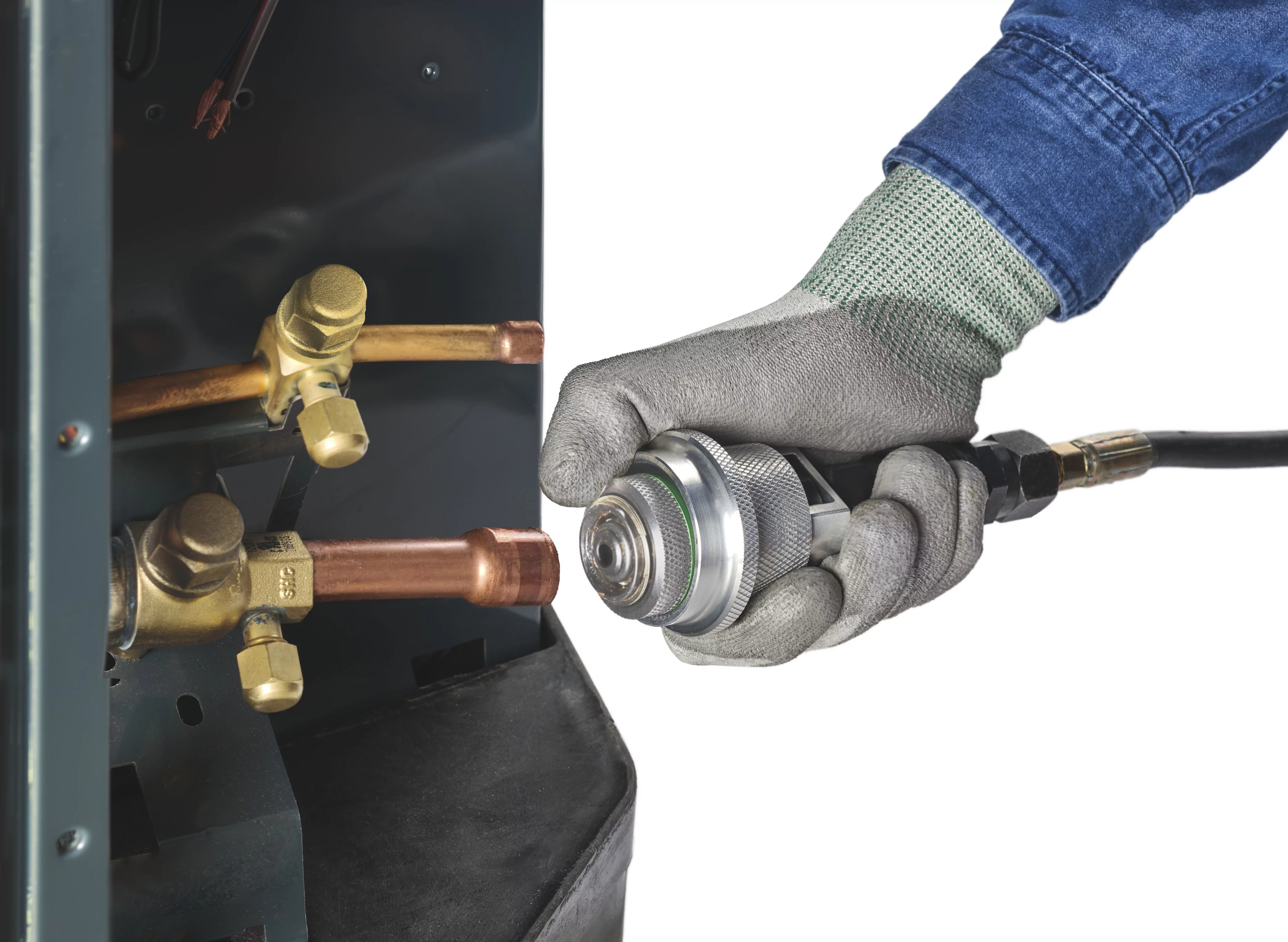
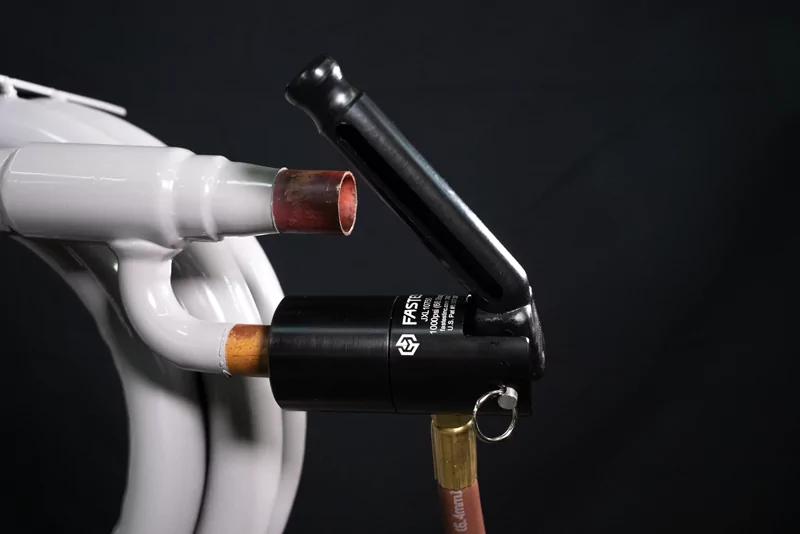
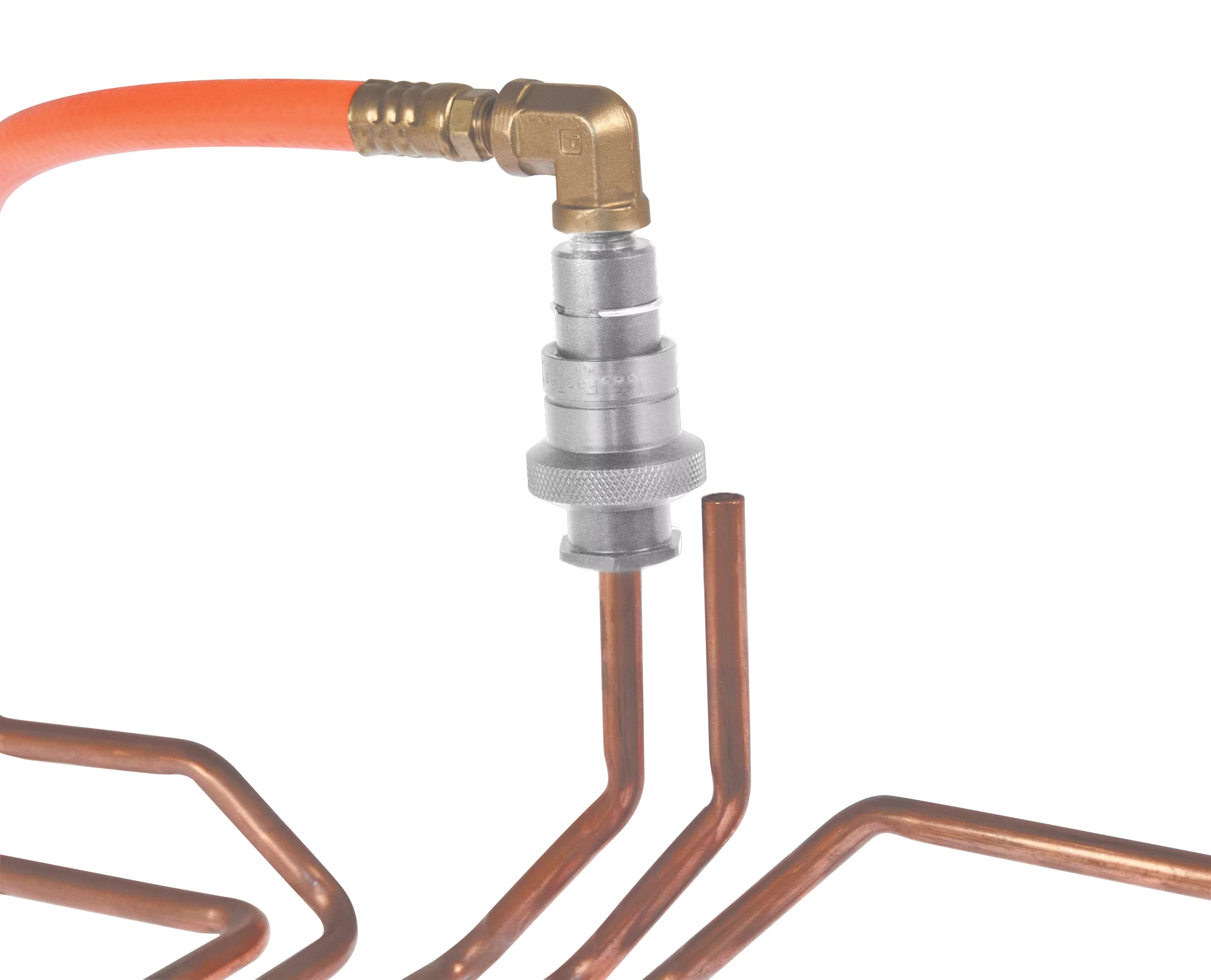
FasTest provides leak testing connectors, processing tools, and access ports for the full range of HVAC-R applications: coil and heat exchanger leak testing, compressor testing, system assembly verification, evacuation, charging, recovery, proof testing, gas burner testing, VRV/VRF system processing, chiller service, heat pump manufacturing, and refrigerated transport.
Are FasTest connectors compatible with A2L and low-GWP refrigerants?
Yes. FasTest provides seal material options that are tested and compatible with A2L refrigerants (R-32, R-454B), HFO refrigerants (R-1234yf), natural refrigerants (propane, CO2, ammonia), and all current HFC refrigerants (R-410A, R-134a, etc.). Contact our team for seal material recommendations for your specific refrigerant.
What is the difference between leak testing connectors and processing connectors?
Leak testing connectors are designed for sealing to component ports during manufacturing leak tests (pressure decay, helium, bubble test). Processing connectors are designed for system-level operations—proof testing, evacuation, charging, and recovery—where they connect to service valves, access ports, and system tubing. FasTest offers both, and many applications use a combination.
What are CoreMax®, PortMax™, and ZeroMax™ access ports?
These are FasTest’s family of HVAC-R access ports designed to replace traditional service valves (Schrader, packed angle, Rotolock, ball valves). CoreMax® provides high-flow access for systems using Schrader-type connections. PortMax™ is a full-bore brazed port for maximum flow on large systems. ZeroMax™ provides zero-emission, hermetically sealed access. All deliver faster processing times and eliminate chronic refrigerant leaks at service ports.
What is EvacMax™?
EvacMax™ is FasTest’s fully automated evacuation cart for commercial and industrial refrigeration systems. It automates the pump-down, monitors up to 6 vacuum gauges in real time, performs automatic vacuum decay testing with auto-retry, and records all data to a downloadable file. EvacMax™ typically cuts evacuation times in half compared to conventional methods.
Does FasTest serve both HVAC-R manufacturers and field service contractors?
Yes. FasTest provides production-grade leak testing connectors and processing tools for OEM manufacturing lines, as well as portable processing connectors, access ports, and EvacMax™ evacuation systems for installation and field service contractors.
How do FasTest connectors reduce false failures in HVAC-R leak testing?
False failures occur when the test connection leaks rather than the part being tested. FasTest HVAC-R connectors are precision-engineered for each port type and include SURE SEAL™ confirmation, which verifies a leak-tight seal before the test begins. This eliminates the most common source of false failures in HVAC-R manufacturing.
Can FasTest design custom connectors for unique HVAC-R applications?
Yes. FasTest’s custom engineering team designs connectors and fixtures for non-standard HVAC-R applications—unusual port geometries, tight clearances, specialized manifold connections, and multi-port fixtures. Start with an Application Evaluation for a recommendation.
How do FasTest access ports help with refrigerant emission reduction?
Traditional Schrader valves and packed-stem valves are common sources of chronic refrigerant leaks. FasTest’s CoreMax®, PortMax™, and ZeroMax™ access ports provide hermetically sealed, zero-emission system access that eliminates these leak paths. This is increasingly important as regulations tighten around refrigerant emissions and as manufacturers transition to more expensive low-GWP refrigerants.
What seal materials does FasTest offer for HVAC-R applications?
FasTest offers a range of seal materials for HVAC-R applications, including options compatible with HFC, HFO, A2L, and natural refrigerants across a wide temperature range. Our engineering team recommends the right seal material based on your specific refrigerant, pressure, and temperature requirements.