


FEG External Cradle Connection Tool
Pneumatic external sealing tool with a custom cradle for flanged ports turbo housings and irregular profiles.
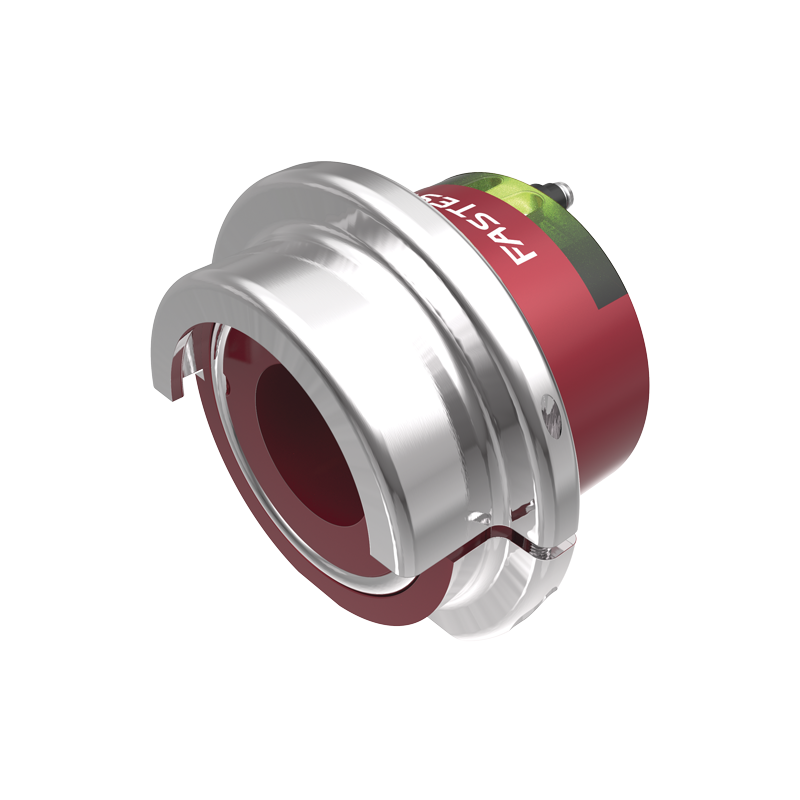
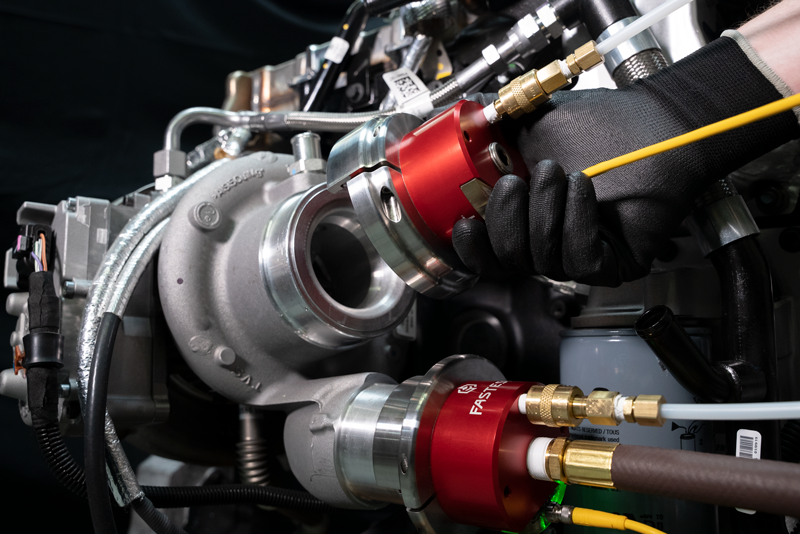
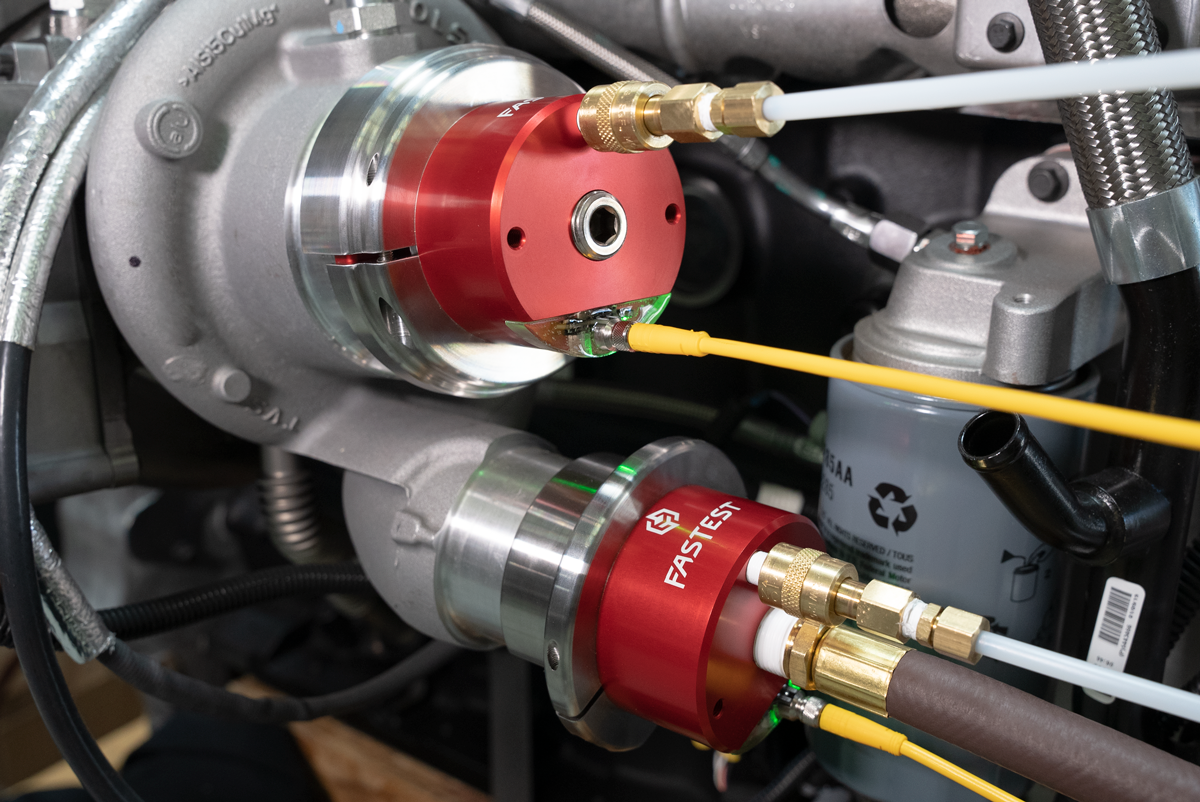
- Gripping cradle minimizes the need for fixturing.
- Improved safety by preventying tool from accidental release under pressure.
- Consistent sealing force with pneumatic actuation.
- Optimized for operator-applied connections to flanged ports and turbos.
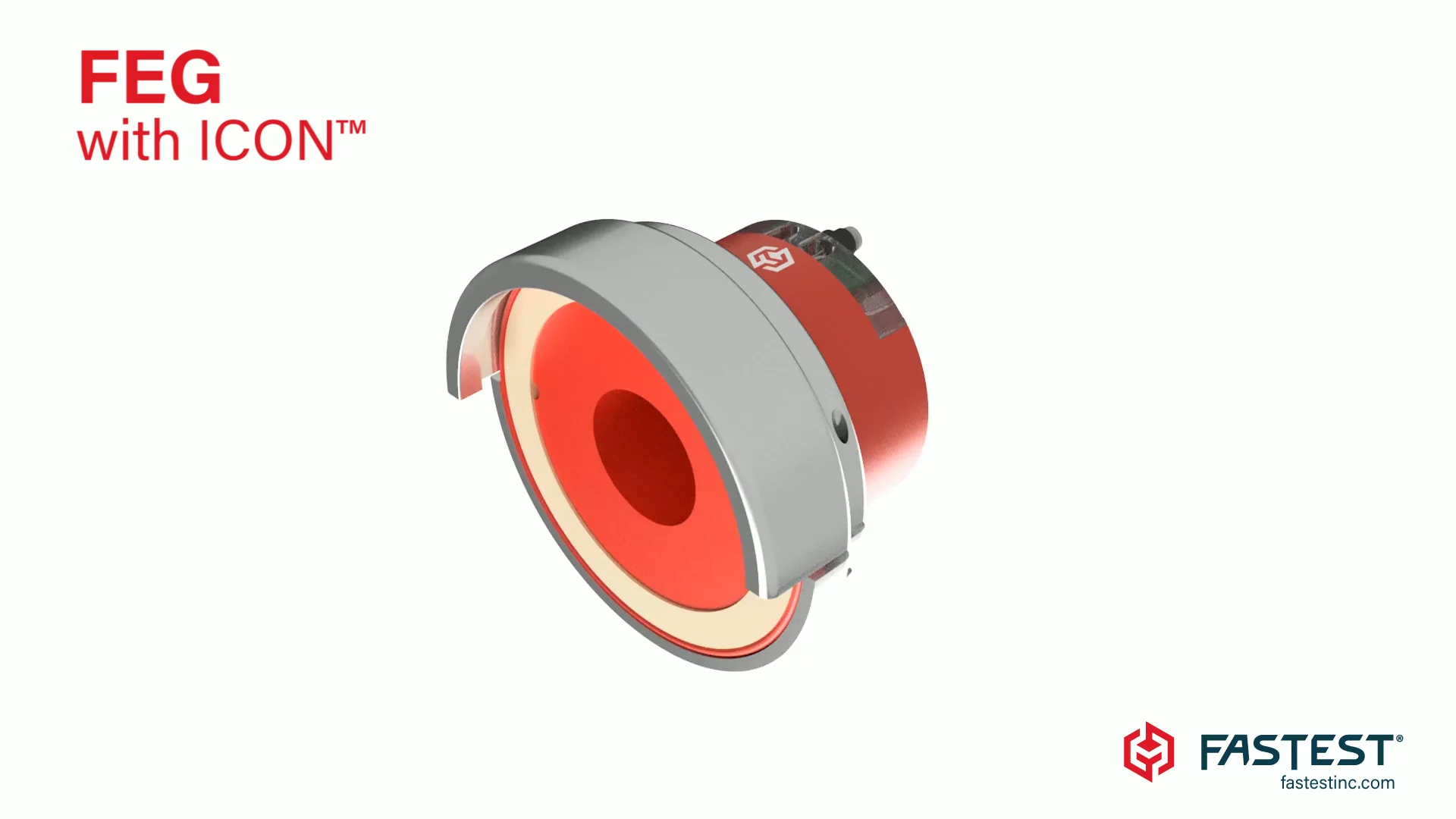
ICON™ | Intelligent Connection Technology
ICON™ sealing connection tools generate data and provide LED feedback to improve sealing connection accuracy, maximize production efficiency, and optimize tool maintenance. Available for select models. Learn more.
Designed For: leak testing and other related processes.
FEG Datasheet: Click Here
FEG Operating Instructions: Click Here
FEG Main Seal Replacement: Click Here
FEG Rebuild / Repair: Click Here
Product Video: Watch Here
Similar Products
FE External Sealing Connection Tool
Pneumatic seal-only connector for fast leak-tight external connections to tubes and threads in automated and semi-automated test processes.
JXL External Lever-Actuated Connection Tool
Manual lever-actuated grip-and-seal connector for smooth straight and swaged tube applications.
FasMate® FX External High-Pressure Connection Tool
Collet-based grip-and-seal connector for threaded and custom external applications up to 5000 psi.
ICON | Programming Tool
Programming and setup tool for ICON | intelligent connection tools.
M8 Cables
M8 connection cables for power and communications with ICON | connection tools.
The Custom Cradle Connector for Flanged Ports and Turbochargers
The FasTest FEG is a pneumatically-actuated cradle connector designed for leak testing flanged ports, turbocharger housings, and other irregular external geometries that standard round connectors cannot seal. Unlike threaded or tube-sealing connectors that grip a circular surface, the FEG cradle connector wraps around the outside of a flange or housing face and presses a custom-profiled seal against the port’s sealing surface—creating a leak-tight connection without bolts, clamps, or gaskets.
Every FEG system is custom-configured for the specific port geometry being tested. FasTest engineers profile the cradle and seal to match the exact flange shape, bolt pattern, surface contour, and sealing area of your component. The pneumatic actuation then applies consistent, repeatable sealing force on every cycle—eliminating the operator-dependent variation that comes with manual clamping or bolted fixtures.
The result is a cradle connector that seals to flange faces and turbo housings in seconds, without the wrenching, bolting, and gasket alignment that traditional methods require. For engine test lines and powertrain manufacturing, the FEG system dramatically reduces connection time at flanged test points while delivering more consistent seal quality than any manual method.
The FEG is available with ICON™ intelligent connection technology, providing SURE SEAL™ digital seal verification, safety interlocks, and real-time connection data for PLC-integrated automated test stations.
The Problem the FEG Cradle Connector Solves
Flanged ports and turbocharger housings present one of the most challenging sealing problems in engine and powertrain leak testing:
Non-circular, non-threaded geometry: Flange faces are not circular openings—they’re flat or contoured surfaces with bolt holes, irregular shapes, and cast surface finishes. Standard round connectors that seal onto tubes or threads have nothing to grip or seal against on a flange face.
Unique geometry per component: Turbocharger inlet and outlet flanges, exhaust manifold ports, and engine housing faces each have unique shapes, bolt patterns, and surface contours. A sealing solution for one flange type won’t work on another.
Traditional methods are slow: Without a purpose-built cradle connector, manufacturers typically bolt or clamp a gasket plate onto the flange for testing—a slow, labor-intensive process that requires multiple fasteners, gasket alignment, and wrench operations at every connection.
Inconsistent seals with bolted fixtures: Bolted test plates create inconsistent sealing depending on the torque applied, the gasket condition, and the operator’s technique. Gaskets wear unevenly and must be replaced frequently. The result is variable test results and high false failure rates.
The FEG cradle connector replaces all of that with a single, pneumatically-actuated tool that seals to the flange in one motion with consistent force every time.
Technical Specifications
| Specification | Detail |
|---|---|
| Product Type | Pneumatically-actuated external cradle connector for flanged ports and irregular external geometries |
| Connects To | Turbocharger flanges (inlet, outlet, oil feed/return), exhaust manifold ports, engine housing faces, intake manifold flanges, and other flat or contoured external sealing surfaces |
| Seal Type | Custom-profiled seal matched to the specific flange geometry. Seal shape, material, and durometer selected for each application. |
| Max Pressure Rating | Vacuum to 120 psi (8.3 bar) |
| Actuation Method | Pneumatic — consistent, calibrated sealing force on every cycle. Operator-positioned or fixture/robot-mounted. |
| ICON™ Availability | Available with ICON™ for select models: SURE SEAL™ verification, safety interlocks, real-time data, PLC integration. |
| Custom Configuration | Every FEG system is custom-designed for the specific flange or port geometry. Contact FasTest with drawings for a recommendation. |
| Target Industries | Automotive (engine, turbo, powertrain), aerospace (engine components, housings), fluid power (manifolds, valve bodies), appliance (housing ports). |
| Safety Features | Pressure-lock safety mechanism prevents accidental release under test pressure. |
| Documentation | Datasheet, operating instructions, main seal replacement, and rebuild/repair instructions available for download. |
Where the FEG Cradle Connector and FEG System Are Used
Turbocharger Leak Testing
Turbocharger manufacturing is one of the most common applications for the FEG cradle connector. Turbo inlet flanges, outlet flanges, and oil feed/return port faces all require leak testing, and their irregular, non-circular geometries make them impossible to seal with standard round connectors. The FEG system provides a custom-profiled cradle connector for each turbo flange configuration, replacing the bolted gasket plates that slow down turbo test lines and create inconsistent results.
Engine Block and Cylinder Head Flange Testing
Engine blocks and cylinder heads have multiple flanged openings—exhaust manifold faces, intake manifold faces, thermostat housing ports, oil filter adapter pads, and accessory mount surfaces—that must be sealed during leak testing. The FEG cradle connector addresses these flanged test points as part of a complete engine test package, sealing to each unique flange geometry with a purpose-built cradle and seal profile.
Exhaust Manifold and Intake Manifold Testing
Manifold leak testing requires sealing to the runner ports on the engine-facing side and the collector or outlet flange on the other. FEG cradle connectors seal to these flanged surfaces without the bolt-on test plates traditionally used, delivering faster cycle times and more consistent seals. For manifold manufacturers, the FEG system reduces test station complexity and eliminates the gasket maintenance that bolted fixtures require.
Aerospace and Fluid Power Housing Testing
Beyond automotive, the FEG cradle connector is used in aerospace engine component testing, fluid power manifold and valve body testing, and any application where an irregular external flange or housing face must be sealed for leak or pressure testing. The custom-profiled cradle approach is equally effective on cast, machined, and formed surfaces across a range of materials and surface finishes.
FEG Cradle Connector vs. Bolted Gasket Plates
| Bolted Gasket Plate | FEG Cradle Connector | |
|---|---|---|
| Connection Time | Minutes — multiple bolts, wrench ops, gasket alignment | Seconds — position cradle, pneumatic actuation |
| Seal Consistency | Varies by bolt torque, gasket condition, operator | Calibrated pneumatic force — identical every cycle |
| Gasket Maintenance | Frequent gasket replacement, variable wear | Engineered seal with documented replacement procedure |
| Fixturing Required | Dedicated bolt plates, guide pins, alignment hardware | Self-locating cradle minimizes external fixturing |
| Operator Strain | Repetitive wrenching on multiple bolts per port | One-step pneumatic actuation, no wrenching |
| Automation Potential | Difficult — bolt patterns require robotic torquing | Straightforward — pneumatic actuation, ICON™ PLC integration |
| False Failure Rate | High — gasket and torque variability | Low — consistent seal with optional SURE SEAL™ verification |
| Throughput Impact | Significant bottleneck at flanged test points | Fast connection removes flange testing as a bottleneck |
Frequently Asked Questions
Q: What is the FEG?
A: The FEG is FasTest’s pneumatically-actuated external cradle connector designed for leak testing flanged ports, turbocharger housings, and other irregular external geometries. Each FEG system is custom-configured with a profiled cradle and seal matched to the specific flange geometry being tested.
Q: What is a cradle connector?
A: A cradle connector is a type of leak test connector that wraps around the outside of a flanged port or housing face rather than inserting into a bore or gripping a tube. The FEG cradle connector uses a cradle-shaped body that locates on the component’s flange geometry and presses a custom-profiled seal against the port’s sealing surface. This approach seals irregular, non-circular, and non-threaded surfaces that standard round connectors cannot address.
Q: What is an FEG system?
A: An FEG system refers to the complete FEG cradle connector configuration for a specific application—including the custom-profiled cradle body, seal, pneumatic actuation, and any mounting hardware. Because every flange geometry is different, each FEG system is custom-designed by FasTest engineers to match the exact port shape, bolt pattern, and sealing surface of the component being tested.
Q: What types of ports does the FEG connect to?
A: The FEG cradle connector seals to turbocharger flanges (inlet, outlet, oil feed/return), exhaust and intake manifold port faces, engine housing surfaces, thermostat housing ports, oil filter adapter pads, and other flat or contoured external sealing surfaces that cannot be sealed with standard threaded or tube-type connectors.
Q: What is the pressure rating of the FEG?
A: The FEG is rated for vacuum to 120 psi (8.3 bar). This pressure range covers the typical leak testing and pressure decay test requirements for the turbocharger, manifold, and engine housing applications where the FEG is used.
Q: How is the FEG actuated?
A: The FEG uses pneumatic actuation to engage the seal against the flange face. This provides consistent, calibrated sealing force on every cycle—unlike manual clamping or bolting, where force varies by operator. The pneumatic actuation can be triggered by the operator or by a PLC on automated test stations.
Q: Is the FEG available with ICON™?
A: Yes, for select models. ICON™-equipped FEG cradle connectors provide SURE SEAL™ digital seal verification, LED feedback, safety interlock signals, and real-time data output for PLC-integrated automated test stations.
Q: How does the FEG compare to bolted gasket plates?
A: The FEG replaces the multi-bolt, multi-minute gasket plate connection with a single pneumatic actuation that takes seconds. It delivers more consistent sealing (calibrated force vs. variable torque), eliminates gasket maintenance, reduces operator strain, and can be integrated into automated test sequences. The comparison table above provides a detailed side-by-side.
Q: Is every FEG custom-designed?
A: Yes. Because flanged port geometries vary by component, every FEG system is custom-configured by FasTest engineers. Submit an Application Evaluation with your port drawings and test requirements, and our team will design the FEG cradle, seal profile, and mounting configuration for your specific application.
Q: What industries use the FEG?
A: The FEG cradle connector is used primarily in automotive and powertrain manufacturing (turbochargers, engines, manifolds), with additional applications in aerospace engine component testing, fluid power manifold/valve body testing, and appliance housing testing.