


ZeroMax™ | Traveler Tool
Installation and processing tool for consistent placement and access of ZeroMax™ | port components.
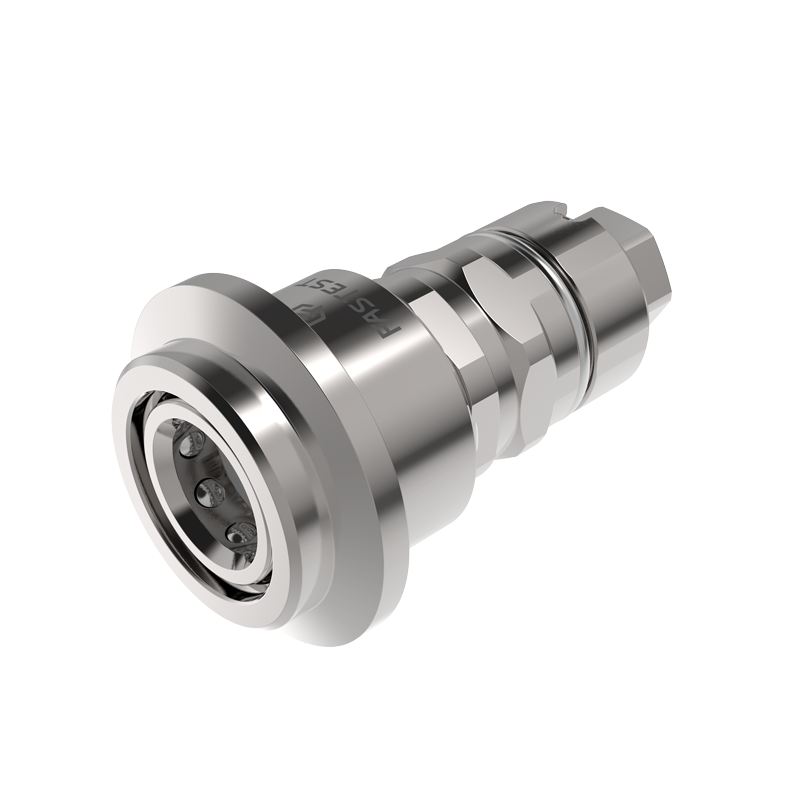
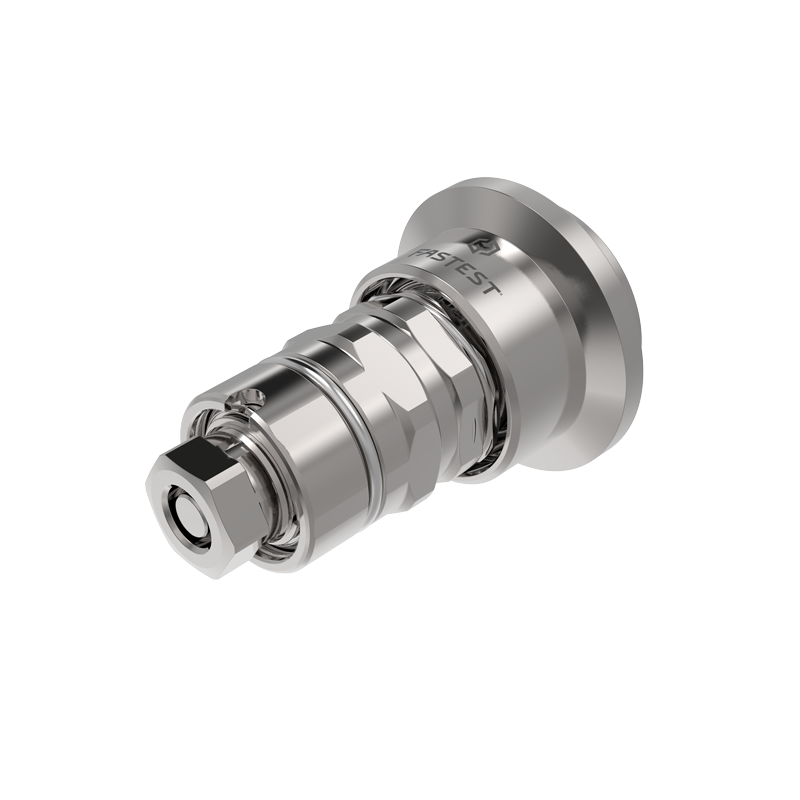
The NEW ZeroMax™ System eliminates the need for Process "Stub" Tubes or crimp type capping systems and their associated crimping & welding equipment. OEM's and Service Technicians now have an easy, repeatable system access for rework, service and end-of-life refrigerant recovery that doesn't leak.
ZeroMax™ assures a hermetic, Zero-Leakage seal by incorporating FasTest's patent pending Access Port technology and Mazimizes Accessibility.
ZeroMax™ Traveler Tool (CMPT40)
Ball latching connector with an internal valve. Load Plug into Traveler before connecting to the Seat at the Evacuation station. Traveler "Travels" down to assembly after which it is used to torque Plug into Seat and then removed from Traveler.
- Ergonomic ball & sleeve action
- Safety Latch system will not disconnect under pressure
- Use Traveler hex to torque Plug into Seat
ZeroMax™ Brochure: Click Here
ZeroMax™ Traveler Operating Instructions: Click Here
ZeroMax™ Traveler Tool Seal Replacement/Rebuild Instructions: Click Here
ZeroMax™ System Guide: Click Here
Similar Products
ZeroMax™ | Refrigerant Access Ports
Zero-leak refrigerant access port system that eliminates process stub tubes while maintaining hermetic sealing.
ZeroMax™ | MBE Leak Test Tool
Leak test tool for fast repeatable connections to ZeroMax™ | access ports in OEM processing.
The Tool That Travels With the Unit — and Torques the Plug That Seals the Port
The FasTest ZeroMax™ Traveler Tool (CMPT40) is the installation tool of the ZeroMax™ system. It is the tool that actually closes the port: it carries the ZeroMax™ Plug, provides access during evacuation, travels with the unit down the line, and then torques the Plug into the Seat to create the hermetic seal. In the ZeroMax™ architecture the port is a Seat (permanent on the product) plus a Plug, and the Traveler is what installs the Plug — the same role the Core Insertion Tool plays for a CoreMax® valve.
Its defining feature is in the name. A Plug is loaded into the Traveler, which is then connected to the Seat at the evacuation station. The system is evacuated through the tool, and because the Traveler has an internal valve and a safety latch that will not disconnect under pressure, it holds that state while it “travels” down to assembly with the unit. There, the Traveler’s hex is used to torque the Plug into the Seat, sealing the port, and the tool is removed — leaving the Plug permanently installed.
That traveling step is what makes the tool distinctive, because it decouples evacuation from sealing. The unit does not have to be evacuated and sealed at a single station in one operation; it can be evacuated, then move down the line under a held vacuum, and be sealed at a later point — which gives the line freedom in how it is laid out and lets a slow evacuation overlap with downstream travel rather than blocking a station. The Traveler bridges the two steps and carries the process state between them.
The seal it creates is a torqued Plug in the Seat — a mechanical, hermetic, metal-to-metal closure with no welding. An ergonomic ball & sleeve action makes the connection at the evacuation station fast and repeatable, and the hex gives controlled torque on the Plug so the seal is consistent from unit to unit.
The Problem the FasTest ZeroMax™ Traveler Tool Solves
Installing the plug that seals a ZeroMax™ port, in production, has to solve several things at once:
-
Evacuation and sealing want to be separate steps: Evacuation takes time; sealing is quick. Tying them to one station makes evacuation the bottleneck. The Traveler holds the evacuated state while the unit moves, so the two can happen at different points on the line.
-
The process state must be held while traveling: If the tool let go of vacuum between evacuation and sealing, the benefit would be lost. The internal valve and the safety latch keep the state held — the tool will not disconnect under pressure.
-
The plug has to be placed consistently: A hand-placed plug varies. The Traveler gives consistent placement and access of the port components, so every unit is sealed the same way.
-
The plug torque matters: Too loose is a leak path; too tight can damage the seal. The Traveler’s hex torques the Plug into the Seat in a controlled, repeatable way.
The FasTest ZeroMax™ Traveler Tool answers each: it carries the Plug and provides access at evacuation, holds the state while it travels via the internal valve and safety latch, and torques the Plug into the Seat for a consistent hermetic seal.
Key Features
Carries the Plug and Travels With the Unit
The Traveler is loaded with a ZeroMax™ Plug, connected to the Seat at the evacuation station, and then travels down to assembly with the unit. This is the workflow the tool is named for: it stays with the unit between evacuation and sealing, so those two operations do not have to happen at the same station in one step.
Internal Valve Holds the Process State
A ball latching connector with an internal valve lets the system be evacuated through the tool and holds that state — so the vacuum drawn at the evacuation station is maintained while the unit travels to the point where the Plug is torqued in. The process is not lost in transit between stations.
Safety Latch — Will Not Disconnect Under Pressure
The safety latch system means the Traveler cannot be disconnected while the system is under pressure. Because the tool is holding a processed system as it travels, that is what keeps the tool on the unit until it is deliberately released at the sealing step — not a matter of operator care.
Torques the Plug Into the Seat With a Hex
At assembly, the Traveler’s hex is used to torque the Plug into the Seat, creating the hermetic metal-to-metal seal that closes the port, after which the tool is removed and the Plug stays installed. Controlled torque is what makes that seal consistent from unit to unit — a plug set too loose is a leak path and one set too tight can damage the seal. (The required torque value should be stated on the page; see the note at the end.)
Ergonomic Ball & Sleeve Action
An ergonomic ball & sleeve action makes the connection to the Seat quick and repeatable at the evacuation station, keeping the tool practical for the volumes of a production line.
Technical Specifications
| Specification | Detail |
|---|---|
| Product Type | Installation and processing tool for placing and sealing ZeroMax™ port components (loads and torques the Plug into the Seat). |
| Part Number | CMPT40. |
| Connects To | ZeroMax™ Seat (carries and installs the ZeroMax™ Plug). |
| Workflow | Load Plug → connect to Seat at evacuation → travel to assembly holding the process state → torque Plug into Seat → remove tool. |
| Valve | Internal valve (holds the evacuated state while traveling). |
| Safety | Safety latch system — will not disconnect under pressure. |
| Plug Installation | Traveler hex torques the Plug into the Seat. |
| Actuation | Ball latching connector with ergonomic ball & sleeve action. |
| System Role | One of the ZeroMax™ tools — alongside the RQD Charge Tool, MBE Leak Test Tool, and MBV Evacuation Tool — all working with ZeroMax™ Refrigerant Access Ports. |
| Documentation | ZeroMax™ brochure, Traveler operating instructions, seal replacement / rebuild instructions, and the ZeroMax™ System Guide. |
Where the FasTest ZeroMax™ Traveler Tool Is Used
Sealing ZeroMax™ Ports in OEM Production
Its core job is on the production line: load the Plug, provide access at the evacuation station, travel with the unit, and torque the Plug into the Seat to seal the port. It is the tool that turns a ZeroMax™ Seat and Plug into a closed, hermetic system.
Evacuate-Then-Travel Line Layouts
Where evacuation is slow relative to the line and would otherwise hold up a station, the Traveler lets the unit be evacuated and then moved along under a held vacuum, with sealing done downstream. This is the layout advantage the traveling design exists to enable.
Flammable-Refrigerant Systems
Because the Traveler seals the port by torquing a Plug rather than by welding, sealing a system built for flammable A2 or A3 refrigerants involves no hot work at the closure — consistent with the safety rationale of the ZeroMax™ system as a whole.
HVAC-R and Refrigerant Systems Manufacturing
The tool belongs to the ZeroMax™ system, so its home is HVAC-R and refrigerant systems — air conditioning, refrigeration, and heat pump production — along with appliance and automotive AC that adopt ZeroMax™ access ports.
Sealing With the ZeroMax™ Traveler vs. Pinch-and-Weld Sealing
| Pinch-and-Weld | ZeroMax™ Traveler | |
|---|---|---|
| Sealing Method | Crimp and weld the tube | Torque a Plug into the Seat |
| Hot Work | Yes — ignition source | None — mechanical seal |
| Evacuate vs Seal | Tied to one station | Decoupled — tool travels between them |
| Process State in Transit | N/A | Held by internal valve + safety latch |
| Seal Consistency | Varies with weld quality | Controlled hex torque |
| Re-Access | Cut open and re-seal | Re-accessible ZeroMax™ port |
| Equipment | Crimping and welding gear | The Traveler tool |
Frequently Asked Questions
Q: What is the ZeroMax Traveler Tool?
A: It is the installation tool of the FasTest ZeroMax™ system, part number CMPT40. It carries the ZeroMax™ Plug, provides access at the evacuation station, travels with the unit down the line, and then torques the Plug into the Seat to seal the port hermetically.
Q: Why is it called a “Traveler”?
A: Because it travels with the unit. After the system is evacuated through the tool at the evacuation station, the Traveler stays connected and moves down to assembly with the unit — holding the process state — before the Plug is torqued into the Seat. That lets evacuation and sealing happen at different points on the line.
Q: What does the Traveler connect to?
A: The ZeroMax™ Seat. It carries the ZeroMax™ Plug and installs it into the Seat; the Seat plus the installed Plug form the sealed port.
Q: How does the Traveler seal the port?
A: Its hex is used to torque the Plug into the Seat, creating a hermetic metal-to-metal seal with no welding. The tool is then removed, leaving the Plug permanently installed.
Q: What is the internal valve for?
A: It lets the system be evacuated through the tool and holds that evacuated state while the Traveler travels with the unit — so the vacuum is not lost between the evacuation station and the point where the Plug is sealed in.
Q: Can the Traveler disconnect under pressure?
A: No. The safety latch system prevents disconnection while the system is under pressure, which keeps the tool on the unit as it travels holding the processed state, until it is deliberately released at sealing.
Q: What torque is needed to install the Plug?
A: The Traveler’s hex torques the Plug into the Seat, but the product page does not currently state the torque value. Because plug torque is critical to a leak-free seal, confirm the correct value with FasTest and the operating instructions before setting a wrench.
Q: How does the Traveler fit with the other ZeroMax tools?
A: The Traveler installs and seals the port; the RQD Charge Tool charges refrigerant through it; the MBE Leak Test Tool leak tests through it; and the MBV Evacuation Tool evacuates through it. All four work with the ZeroMax™ Refrigerant Access Ports.
Q: What is the part number?
A: CMPT40. Distributors and repeat buyers can search that part number directly for the ZeroMax™ Traveler Tool.
Q: What industries use the ZeroMax Traveler Tool?
A: HVAC-R and refrigerant systems — air conditioning, refrigeration, and heat pump manufacturing — along with appliance and automotive AC production using ZeroMax™ access ports, particularly where flammable refrigerants make a no-hot-work seal valuable.