


CoreMax® Core Insertion Tool
Insertion tool for accurate placement of the CoreMax® valve core into the seat.
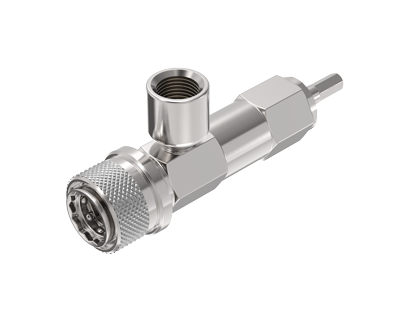
For high flow evacuation processing through the CoreMax Seat only. Insert core after processing.
- Ergonomic ball & sleeve action
- 3/8 NPT media port
8 ft-lbs (96 In-lbs) of torque needed for CoreMax Valve.
ALWAYS USE TORQUE WRENCH, DO NOT EXCEED 8 ft-lbs (0.9 N-m) TORQUE!
CoreMax Insertion Tool Operating Instructions: Click Here
CoreMax Insertion Tool Seal Replacement Instructions: Click Here
CoreMax Insertion Tool Rebuild Instructions: Click Here
How To Video - Install CoreMax Access Valve: Click Here
How To Video - CoreMax Removal & Replacement: Click Here
How To Video - Install CoreMax Access Valve: Click Here
How To Video - CoreMax Removal & Replacement: Click Here
Similar Products
CoreMax® Refrigerant Access Valve
High-flow valve core that mates with the CoreMax® Seat to create a complete refrigerant access valve.
CoreMax® Refrigerant Access Seats
Seat components that mate with the CoreMax® Valve to form a complete high-flow refrigerant access valve.
The Tool That Makes High-Flow Evacuation Through the Seat Possible
The FasTest CoreMax® Core Insertion Tool places the CoreMax® valve core accurately into the seat after processing. It is the piece that completes the CoreMax® high-flow evacuation method: process first through the bare seat, then insert the core.
The reason that sequence matters is flow. Any valve core, however high-flow, is still a restriction in the evacuation path. The fastest possible evacuation is through the seat alone, with no core in the way at all — which is exactly how the CoreMax® system is designed to be processed. But evacuating through an empty seat only works if there is a clean, controlled way to install the core afterward. That is what this tool does: it connects to the CoreMax® seat, carries the process media through its own 3/8 NPT media port for high-flow evacuation through the seat only, and then inserts the core into the seat once processing is complete.
Core placement has to be right. The CoreMax® valve requires 8 ft-lbs (96 in-lbs) of torque, and the insertion tool is built to place the core accurately with an ergonomic ball & sleeve action rather than by feel. Correct torque is not a detail — a core installed too loose or too tight is a leak path or a damaged component on a valve that stays on the finished product. FasTest specifies that a torque wrench is always used and that the stated torque is not exceeded (see the operating instructions and the on-page warning for the exact figure).
The tool operates across the full CoreMax® range — from 10 millitorr (micron) of vacuum to 750 psi (51.7 bar) — and works with the two components shown below it: the CoreMax® Refrigerant Access Valve (the core) and the CoreMax® Refrigerant Access Seats. Together the seat, the core, and this insertion tool are what let a line evacuate at full flow and then close the system with a correctly seated core.
The Problem the FasTest CoreMax® Core Insertion Tool Solves
Getting the fastest evacuation and a properly sealed valve are, with a conventional core, in tension. This tool resolves it:
-
An installed core restricts evacuation: Evacuating through a valve with its core already in place means pulling vacuum through the core’s restriction — slower, and often the cycle-time bottleneck on a line.
-
But the core still has to go in: Evacuating through an empty seat is only useful if the core can then be installed cleanly, at the right torque, without undoing the processing that was just done.
-
Core torque is critical and easy to get wrong: By hand and by feel, a core can be seated too loose (a leak path) or too tight (a damaged core or seat) — on a valve that stays on the finished product and may be serviced later.
-
Handling small cores is fiddly and slow: Placing a core accurately into a seat, repeatedly, is awkward without a tool designed for it.
The FasTest CoreMax® Core Insertion Tool answers each: it evacuates at high flow through the bare seat via its media port, then places the core accurately into the seat with an ergonomic ball & sleeve action, at the specified torque, using a torque wrench as required.
Key Features
High-Flow Evacuation Through the Seat Only
The tool is made for high-flow evacuation processing through the CoreMax® seat only — the core is inserted after processing. Evacuating through the bare seat, with nothing in the flow path, is the fastest way to pull a system down, which is the whole reason the CoreMax® method separates processing from core installation.
3/8 NPT Media Port
A 3/8 NPT media port lets the process media — vacuum or charge — pass through the tool during processing, so evacuation runs through the tool and the seat as a single high-flow path. The port is what allows the tool to both process the system and then install the core, rather than requiring one connection to evacuate and another to insert.
Accurate, Torque-Controlled Core Placement
The CoreMax® valve requires 8 ft-lbs (96 in-lbs) of torque, and the insertion tool is built to place the core accurately to that specification. Correct torque matters because the seated core is the seal on a valve that remains on the finished product: too loose leaks, too tight damages the core or seat. FasTest requires that a torque wrench always be used and that the specified torque not be exceeded — the exact figure and warning are on the page and in the operating instructions.
Ergonomic Ball & Sleeve Action
An ergonomic ball & sleeve action places the core into the seat in a controlled motion rather than by hand or by feel. For a step repeated many times — in production or in service — that makes core installation faster, more consistent, and less awkward than handling a small core directly.
Technical Specifications
| Specification | Detail |
|---|---|
| Product Type | Insertion tool for placing the CoreMax® valve core into the seat after high-flow evacuation. |
| Connects To | CoreMax® seat. |
| Pressure / Vacuum Range | 10 millitorr (micron) vacuum to 750 psi (51.7 bar). |
| Actuation Method | Sleeve — ergonomic ball & sleeve action. |
| Media Port | 3/8 NPT. |
| Processing Method | High-flow evacuation through the CoreMax® seat only; core inserted after processing. |
| Core Torque | 8 ft-lbs (96 in-lbs) required for the CoreMax® valve. Torque speed not to exceed 200RPMS |
| Target Industry | HVAC-R and refrigerant systems manufacturing and service; appliance and automotive AC. |
| Documentation | Operating instructions, seal replacement instructions, and rebuild instructions, plus how-to videos for installing the CoreMax® access valve and for core removal and replacement. |
Where the FasTest CoreMax® Core Insertion Tool Is Used
High-Flow Evacuation Processing (OEM Production)
On production lines using the CoreMax® system, the tool enables evacuation through the bare seat at full flow, then installs the core once the system is processed. It is the step that lets a line take the fastest evacuation route without giving up a properly seated, torque-controlled valve at the end.
Core Installation After Processing
Whether after evacuation, charging, or testing, the tool places the CoreMax® valve core accurately into the seat at the specified torque — completing the valve and closing the system with a consistent, repeatable connection.
Service — Core Removal and Replacement
The tool is also used in service to remove and replace a CoreMax® core, as the how-to videos on the page show. Because the seat stays on the equipment, a worn or leaking core can be replaced in the field without disturbing the installed seat — and the insertion tool sets the new core to the correct torque.
HVAC-R and Refrigerant Systems
The tool belongs to the CoreMax® refrigerant access system, so its home is HVAC-R and refrigerant systems — air conditioning, refrigeration, and heat pump manufacturing and service, along with appliance and automotive AC production that use CoreMax® high-flow access valves.
FasTest CoreMax® Core Insertion Tool vs. a Standard Valve Core Tool
| Standard Valve Core Tool | CoreMax® Core Insertion Tool | |
|---|---|---|
| Designed For | Generic Schrader-type cores | CoreMax® high-flow core and seat |
| Evacuation | Through an installed core (restrictive) | Through the bare seat (high flow) |
| Process Path | No integrated media port | 3/8 NPT media port — process through the tool |
| Torque Control | Typically by feel | To spec, torque wrench required |
| Core Placement | Manual, variable | Accurate ball & sleeve action |
| Pressure / Vacuum | Limited | 10 millitorr to 750 psi (51.7 bar) |
| Workflow Role | Install core only | Evacuate through seat, then install core |
Frequently Asked Questions
Q: What is the CoreMax Core Insertion Tool?
A: It is a FasTest tool that places the CoreMax® valve core accurately into the seat after processing. It connects to the CoreMax® seat, allows high-flow evacuation through the seat via a 3/8 NPT media port, and then installs the core with an ergonomic ball & sleeve action at the specified torque.
Q: Why is the core inserted after evacuation?
A: Because any valve core is a restriction in the evacuation path. Evacuating through the bare CoreMax® seat, with no core in place, is the fastest way to pull a system down. The core is then installed afterward — which is only practical because this tool provides a clean, torque-controlled way to do it.
Q: What does the CoreMax Core Insertion Tool connect to?
A: The CoreMax® seat. It installs the CoreMax® valve core (the Refrigerant Access Valve) into that seat to complete the valve.
Q: What torque does the CoreMax valve core require?
A: FasTest specifies 8 ft-lbs (96 in-lbs) for the CoreMax® valve, and requires that a torque wrench always be used and the specified torque not be exceeded.
Q: What is the 3/8 NPT media port for?
A: It carries the process media — vacuum or charge — through the tool during processing, so evacuation runs through the tool and the bare seat as one high-flow path, and the same tool then installs the core.
Q: Is this the same as a standard valve core tool?
A: No. A standard valve core tool installs generic Schrader-type cores, usually by feel. The CoreMax® Core Insertion Tool is specific to the CoreMax® high-flow core and seat: it evacuates through the bare seat via a media port and installs the core to a controlled torque. If you are working with the CoreMax® system, this is the tool for it; it is not a universal core tool for other valve types.
Q: Can it be used for service, not just production?
A: Yes. It is used in service to remove and replace a CoreMax® core — the seat stays on the equipment, so a worn or leaking core can be replaced in the field and set to the correct torque with the same tool.
Q: What pressure and vacuum range does it cover?
A: From 10 millitorr (micron) of vacuum to 750 psi (51.7 bar) — the full CoreMax® range.
Q: What other CoreMax components do I need?
A: The CoreMax® seat (which stays on the product) and the CoreMax® valve core (the Refrigerant Access Valve). The seat and core together form the complete high-flow refrigerant access valve; this tool installs the core into the seat.
Q: What industries use the CoreMax Core Insertion Tool?
A: HVAC-R and refrigerant systems — air conditioning, refrigeration, and heat pump manufacturing and service — along with appliance and automotive AC production using CoreMax® high-flow access valves.