


CoreMax® Refrigerant Access Valve
High-flow valve core that mates with the CoreMax® Seat to create a complete refrigerant access valve.
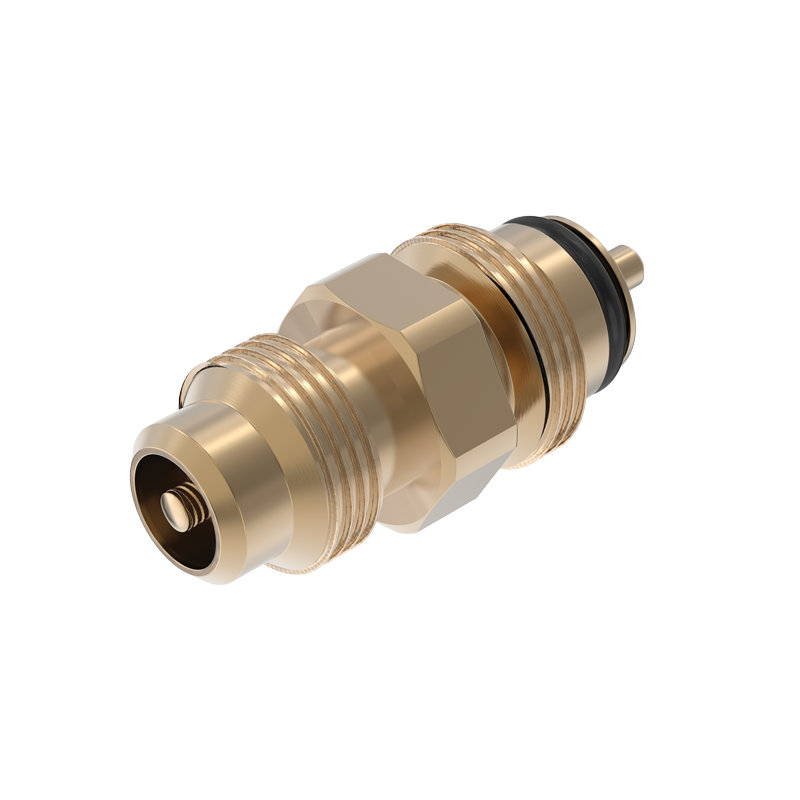
- Specifically designed for refrigeration applications maximizing flow and robust sealing technology.
- The CoreMax® core utilizes one elastomeric seal to seal both the valve as well as the joint between the core and the seat.
- The valve core pin position is manufactured to exact tolerances for consistent sealing and maximum valve opening for the highest flow available.
- The CoreMax® valve has a 7/16-20 45° flare which is the industry standard for access valves, so all standard service tools can be used.
Designed For: refrigeration applications maximizing flow and robust sealing technology.
CoreMax Brochure: Click Here
CoreMax Datasheet: Click Here
CoreMax Technical Bulletin: Click Here
CoreMax to Seat Installation: Click Here
CoreMax to Panel Mount Seat Installation: Click Here
CoreMax Oiler Pump Can: Click Here
CoreMax Seat Brazing Instructions: Click Here
How To Video - Install CoreMax Access Valve: Click Here
How To Video - CoreMax Removal & Replacement: Click Here
How To Video - Install CoreMax Access Valve: Click Here
How To Video - CoreMax Removal & Replacement: Click Here
Similar Products
CoreMax® SnapMate | Service Tool
Service connector for fast leak-tight access to CoreMax® and Schrader® flare connections up to 625 psi.
CoreMax® Refrigerant Access Seats
Seat components that mate with the CoreMax® Valve to form a complete high-flow refrigerant access valve.
CoreMax® SnapMate | OEM Tool
High-flow OEM processing tool for fast connection to CoreMax® valves during leak testing evacuation and charging.
High Flow, and Still Standard — the Serviceable Core of the CoreMax® Valve
The FasTest CoreMax® refrigerant access valve is the valve core — the other half of the CoreMax® valve. A complete CoreMax® valve is a seat and a core: the seat is the permanent, precision half installed on the product, and the core is the valve element that installs into it. Mated together, they form a complete, high-flow refrigerant access valve, and the core is the serviceable half — it can be installed into, and replaced in, the seat.
What defines the core is high flow. Its pin position is manufactured to exact tolerances so that the valve opens as far as possible — maximum valve opening for the highest flow available — while still sealing consistently. That is the whole point of CoreMax®: an access valve that does not choke flow the way a restrictive core does, so evacuation and charging run faster through it.
It seals with elegant economy. A single elastomeric seal does double duty — it seals the valve closed and it seals the joint between the core and the seat. One seal, two sealing jobs: fewer parts, and robust sealing technology at both points that matter.
And here is the part that makes it easy to adopt: the CoreMax® valve presents a 7/16-20 45° flare — the industry-standard connection for access valves — so all standard service tools can access it. You get CoreMax®’s high flow without being locked into proprietary service tooling: the CoreMax® system tools give you the high-flow OEM processing, and the standard 45° flare means any technician with standard tools can service the valve in the field. High flow, on the standard everyone already has. The core is rated across the CoreMax® range, vacuum to 750 psi (51.7 bar).
The Problem the FasTest CoreMax® Valve Core Solves
A refrigerant access valve has to reconcile things that usually pull against each other — which is what the CoreMax® core is designed to do:
-
Flow vs. a restrictive core: A conventional access-valve core chokes flow. The CoreMax® core is machined for maximum valve opening, so it delivers the highest flow available while still sealing consistently.
-
Seal reliability with fewer parts: More sealing points mean more to leak. The single elastomeric seal closes both the valve and the core-to-seat joint — robust sealing with fewer parts.
-
High flow vs. tool lock-in: A proprietary high-flow valve that only its own tools can service is a burden in the field. The 7/16-20 45° flare is the industry standard, so standard service tools work — no lock-in.
-
Serviceability: When a core wears, replacing the whole valve is wasteful. The CoreMax® core installs into, and is replaceable in, the seat, so the permanent seat stays and only the core is changed.
The FasTest CoreMax® core answers each: maximum-opening high flow, a single-seal robust seal, the industry-standard 45° flare for standard-tool access, and a serviceable, replaceable core.
Key Features
High Flow — Maximum Valve Opening, Precisely Set
The valve core’s pin position is manufactured to exact tolerances, which does two things at once: it holds a consistent seal and it opens the valve as far as it will go, for the highest flow available. Flow is CoreMax®’s reason to exist, and the precision of the pin position is what delivers it.
One Elastomeric Seal, Two Sealing Jobs
The core uses a single elastomeric seal to seal both the valve itself and the joint between the core and the seat. Rather than separate seals for the valve and the joint, one seal handles both — fewer parts, and robust sealing at the two points that matter.
7/16-20 45° Flare — the Industry Standard
The CoreMax® valve presents a 7/16-20 45° flare, the industry-standard access-valve connection, so all standard service tools can be used with it. This is what lets a high-flow valve stay easy to live with: CoreMax® system tools handle high-flow OEM processing, and the standard flare means the valve can be serviced with the standard tools a technician already carries.
Serviceable, Replaceable Core
The core installs into the CoreMax® seat and can be removed and replaced — the CoreMax® technical bulletin covers valve-core replacement, and a how-to video shows removal and replacement. Because the seat is permanent and the core is serviceable, a worn core is swapped without disturbing the installed seat.
Mates With the CoreMax® Seat; Full CoreMax® Range
The core mates with the CoreMax® seat to form the complete high-flow valve, and is rated from vacuum to 750 psi (51.7 bar) — the CoreMax® range shared with the seat.
Technical Specifications
| Specification | Detail |
|---|---|
| Product Type | Valve core of the CoreMax® refrigerant access valve — mates with the CoreMax® seat to form the complete high-flow valve. |
| Designed For | Refrigeration applications — maximizing flow and robust sealing. |
| Connects To / Mates With | CoreMax® seat (forms the complete valve). |
| Flow | Maximum valve opening for the highest flow available — pin position machined to exact tolerances. |
| Sealing | One elastomeric seal seals both the valve and the core-to-seat joint. |
| Connection Standard | 7/16-20 45° flare — the industry standard for access valves; all standard service tools can be used. |
| Serviceability | Core installs into and is replaceable in the seat (see the CoreMax® technical bulletin for valve-core replacement). |
| Pressure / Vacuum Range | Vacuum to 750 psi (51.7 bar). |
| Actuation Type | OEM. |
| Pairs With | CoreMax® Refrigerant Access Seats (the permanent half). |
| Documentation | CoreMax® brochure and datasheet; technical bulletin (leak evaluation and valve-core replacement); CoreMax-to-seat and panel-mount seat installation; seat brazing; oiler pump can; how-to videos. |
Where the FasTest CoreMax® Valve Core Is Used
High-Flow OEM Refrigerant Access
Installed into a CoreMax® seat, the core gives a product a high-flow access valve — faster evacuation and charging than a restrictive core allows — which is its core OEM use in refrigeration manufacturing.
Serviced With Standard Tools in the Field
Because the valve presents the 7/16-20 45° flare, a field technician can access it with standard service tools — no proprietary tooling required — which makes CoreMax®-equipped systems straightforward to service anywhere.
Core Replacement
When a core reaches the end of its service life, it is replaced in the installed seat rather than replacing the whole valve — the serviceable-core advantage, covered by the CoreMax® valve-core replacement instructions.
HVAC-R, Appliance, and Automotive AC
As part of the CoreMax® high-flow access system, the core’s home is HVAC-R and refrigerant systems — air conditioning, refrigeration, and heat pump manufacturing and service, plus appliance and automotive AC.
CoreMax® Valve Core vs. a Conventional Schrader-Type Core
| Schrader-Type Valve Core | CoreMax® Valve Core | |
|---|---|---|
| Flow | Restrictive | Maximum opening — highest flow available |
| Sealing | Standard core seal | One elastomeric seal — valve + seat joint |
| Precision | Standard | Pin position to exact tolerances |
| Service-Tool Access | Standard | 7/16-20 45° flare — standard tools too |
| Serviceability | Replace core | Replaceable core in a permanent seat |
| Pressure / Vacuum | Varies | Vacuum to 750 psi (51.7 bar) |
| Best For | General access | High-flow access without tool lock-in |
Frequently Asked Questions
Q: What is the CoreMax Refrigerant Access Valve?
A: It is the valve core of the CoreMax® access valve — the high-flow valve element that mates with the CoreMax® seat to form a complete refrigerant access valve. It is machined for maximum valve opening and the highest flow available, seals with a single elastomeric seal, and presents a 7/16-20 45° flare so standard service tools can be used.
Q: What is the difference between the CoreMax valve and the CoreMax seat?
A: They are the two halves of one valve. The seat is the permanent, precision half installed on the product; the valve (the core) is the serviceable element that installs into the seat. Together — core and seat — they form the complete high-flow CoreMax® valve.
Q: Why is the CoreMax valve high flow?
A: Its pin position is manufactured to exact tolerances so the valve opens as far as possible — maximum valve opening — while still sealing consistently. That gives the highest flow available, so evacuation and charging run faster than through a restrictive core.
Q: What does the single elastomeric seal do?
A: One elastomeric seal does two jobs: it seals the valve closed and it seals the joint between the core and the seat. Using a single seal for both means fewer parts and robust sealing at both points.
Q: Can standard service tools be used with the CoreMax valve?
A: Yes. The valve has a 7/16-20 45° flare, the industry-standard access-valve connection, so all standard service tools can be used with it. The CoreMax® system tools handle high-flow OEM processing, and the standard flare means the valve can also be serviced with the standard tools a technician already carries — high flow without proprietary tool lock-in.
Q: Is the CoreMax valve core replaceable?
A: Yes. The core installs into the CoreMax® seat and can be removed and replaced — the CoreMax® technical bulletin covers valve-core replacement, and a how-to video shows removal and replacement. The permanent seat stays; only the core is changed.
Q: What pressure and vacuum range does the valve cover?
A: Vacuum to 750 psi (51.7 bar) — the CoreMax® range, shared with the seat.
Q: How is the CoreMax core different from a Schrader core?
A: A Schrader-type core is restrictive; the CoreMax® core is machined for maximum valve opening and the highest flow available, seals with a single elastomeric seal at both the valve and the seat joint, and is a replaceable core in a permanent seat. Both can be reached with standard service tools, since CoreMax® uses the industry-standard 45° flare.
Q: What installs the core into the seat?
A: The core installs into the seat per the CoreMax-to-seat installation instructions; the CoreMax® Core Insertion Tool is designed to install and torque the core into the seat, and the CoreMax® system tools then process through the completed valve.
Q: What industries use the CoreMax valve?
A: HVAC-R and refrigerant systems — air conditioning, refrigeration, and heat pump manufacturing and service — along with appliance and automotive AC that use CoreMax® high-flow access valves.