


PortMax™ | Refrigerant Access Ports
Large-capacity refrigerant access port system designed to reduce evacuation time and maximize processing flow.
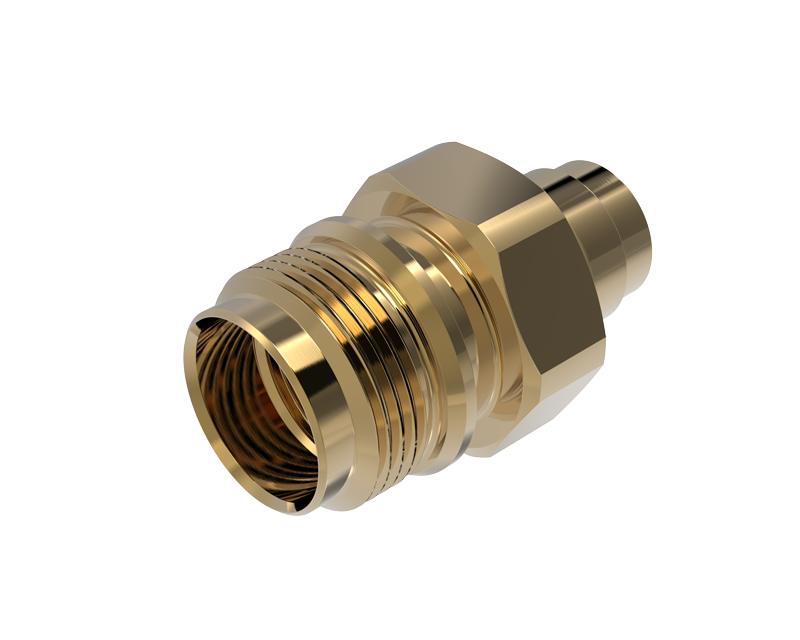
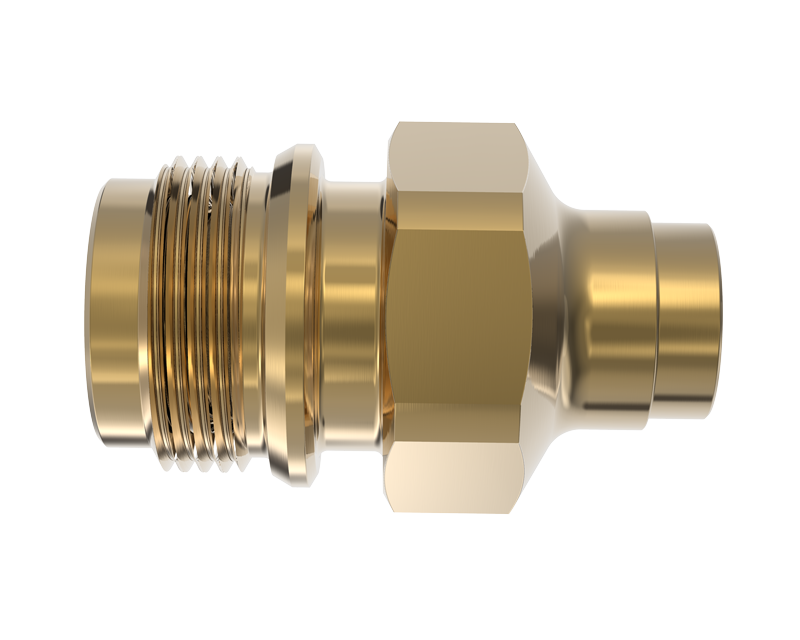
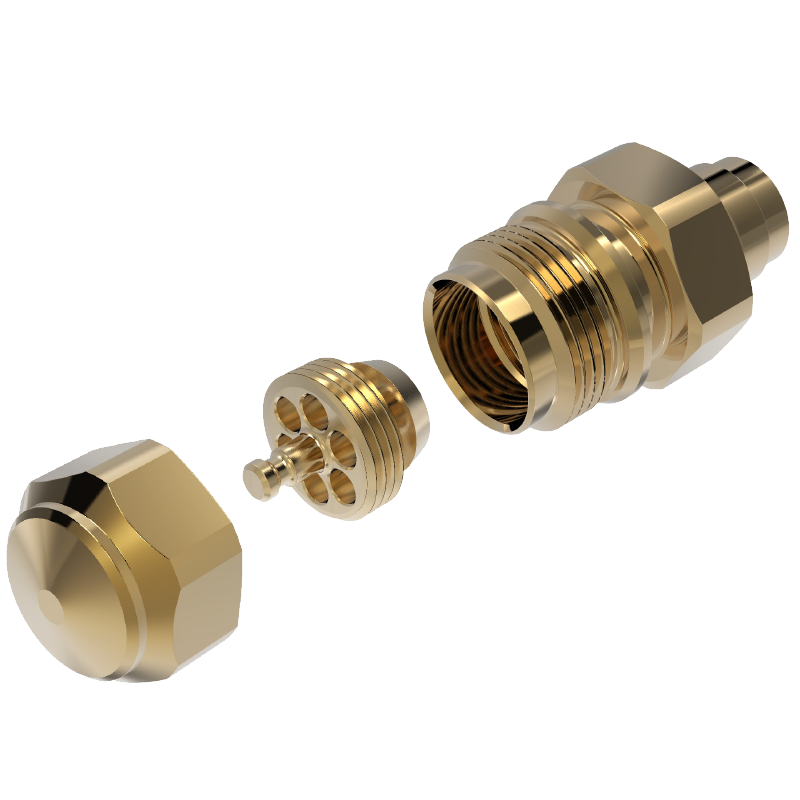
The NEW PortMax™ access port system is specifically designed to reduce processing time, in particular, evacuation time (degass/dehydrate) of large volume refrigerant systems currently processing through packed angle or ball valves.
PortMax™ Brochure: Click Here
PortMax™ Installation Instructions: Click Here
PortMax™ System Guide: Click Here
Similar Products
CoreMax® Refrigerant Access Valve
High-flow valve core that mates with the CoreMax® Seat to create a complete refrigerant access valve.
ZeroMax™ | Refrigerant Access Ports
Zero-leak refrigerant access port system that eliminates process stub tubes while maintaining hermetic sealing.
The Large-Capacity Port at the Center of the PortMax™ System
The FasTest PortMax™ refrigerant access port is the large-capacity access port the whole PortMax™ system is built around — the fixed point on the equipment that every PortMax™ tool connects to. It is designed to reduce evacuation time and maximize processing flow on large-volume refrigerant systems: the large systems that would otherwise be processed through packed angle or ball valves, where those restrictive fittings make evacuation slow.
Its value is conductance and capacity. On a large system, the time to evacuate — to degas and dehydrate down to a deep vacuum — is dominated by how freely gas can flow out, and a large-capacity, high-conductance port is what shortens it. The same wide path speeds charging and every other processing step. This is why PortMax™ exists as a distinct system: it is the access port sized and shaped for large-volume systems, where the small service fittings used elsewhere become the bottleneck.
The port mounts to the system in one of two ways — a 0.625″ saddle mount or a 1/2 NPT thread — and is rated across the full processing range, from 20 micron (0.020 torr) of vacuum to 2031 psi (140 bar). Once installed, it is the interface the PortMax™ tools work through: the Evacuation Tool evacuates through it, the Charge Tool charges through it, the Leak Test Tool tests through it, and the Service Tool covers field recovery and service — with the port sealed by a Plug torqued into place.
Specifying the port is the first decision in adopting PortMax™; the tools follow from it. That makes this page the natural starting point for anyone evaluating the system — which is also why it should lead a visitor onward to the tools, something the current page does not yet do (noted at the end).
The Problem the FasTest PortMax™ Access Port Solves
Processing a large-volume refrigerant system through conventional access fittings is slow, and the slowness compounds with size:
-
Packed angle and ball valves restrict flow: They are convenient service fittings but narrow, low-conductance paths — so evacuating a large system through them takes a long time.
-
Evacuation time dominates on large systems: The bigger the volume, the more processing time is governed by how fast the system can be pulled down. A large-capacity, high-conductance port attacks exactly that.
-
Every processing step shares the path: Evacuation, charging, leak testing, and service all run through the access point. A restrictive one slows all of them; a large one speeds all of them.
-
Large systems need a purpose-sized port: A small service fitting is simply the wrong size for a large system. PortMax™ is the port scaled for the job, with a 1/2 NPT tool interface and a large flow path.
The FasTest PortMax™ access port answers each: a large-capacity, high-conductance port that reduces evacuation time and maximizes processing flow, mounts by saddle or NPT thread, and serves as the single interface for the whole PortMax™ tool set.
Key Features
Large Capacity, High Conductance
The port is large-capacity and high-conductance by design, so gas flows freely through it. On a large-volume system that directly reduces evacuation time — the slowest step in processing — and maximizes flow for charging and every other operation. It is the defining property of the PortMax™ system and the reason it is a separate line from FasTest’s other access systems.
Reduces Evacuation Time on Large-Volume Systems
PortMax™ is aimed squarely at large-volume refrigerant systems currently processed through packed angle or ball valves. Replacing that restrictive path with a large-capacity port is what cuts the degas/dehydrate time, which on a large system is a major share of total processing time.
Mounts by Saddle or NPT Thread
The port installs to the system as a 0.625″ saddle mount or a 1/2 NPT thread, so it can be designed into a range of large-system builds. This is the system side of the port; the tool side presents the PortMax™ connection the tools latch onto.
Wide Processing Range — Deep Vacuum to High Pressure
Rated from 20 micron (0.020 torr) of vacuum to 2031 psi (140 bar), the port covers the full processing range on one interface — deep-vacuum dehydration at one end and high-pressure work at the other.
The Hub of the PortMax™ Tool System
The port is the fixed point the PortMax™ tools work against: the Evacuation Tool (CMFT80) evacuates through it, the Charge Tool (CMFT70) charges through it, the Leak Test Tool (CMFT60) tests through it, and the Service Tool (CMFT90) recovers and services through it — sealing the system with a Plug torqued into the port.
Technical Specifications
| Specification | Detail |
|---|---|
| Product Type | Large-capacity, high-conductance refrigerant access port for large-volume systems. |
| Mounting (Connects To) | 0.625″ saddle mount, or 1/2 NPT thread. |
| Pressure / Vacuum Range | 20 micron (0.020 torr) of vacuum to 2031 psi (140 bar). |
| Tool Interface | PortMax™ tool connection (Evacuation, Charge, Leak Test, Service tools — 1/2 NPT media port on the tools). |
| Sealing | Sealed by a Plug torqued into the port. |
| Materials | Brass |
| Refrigerant Compatibility | a1,a2,a3 |
| Actuation Type | OEM. |
| Replaces | Packed angle valves and ball valves used to process large-volume refrigerant systems. |
| Compatible Tools | PortMax™ Evacuation Tool (CMFT80), Charge Tool (CMFT70), Leak Test Tool (CMFT60), and Service Tool (CMFT90). |
| Target Industry | HVAC-R — chillers and other large commercial/industrial air conditioning, refrigeration, and heat pump systems. |
| Documentation | PortMax™ brochure, installation instructions, and the PortMax™ System Guide. |
Where the FasTest PortMax™ Access Port Is Used
Chillers
Chillers are large-volume refrigerant systems, and evacuating one through a small service valve is slow. A large-capacity PortMax™ port cuts that time and speeds every other processing step — which makes chillers a prime application, and “chiller access port” an accurate description of what the PortMax™ port is for.
Commercial and Industrial Refrigeration
Large commercial and industrial refrigeration systems share the same challenge — large volumes where evacuation time dominates — and the same solution: a large-capacity access port in place of a packed angle or ball valve.
Large Air Conditioning and Heat Pump Systems
Larger air conditioning and heat pump systems, in manufacturing and in service, benefit from the high-conductance port for faster processing on the line and easier access in the field through the PortMax™ tools.
Large-Volume Systems Replacing Packed Angle / Ball Valves
Any large-volume refrigerant system currently processed through packed angle or ball valves is a candidate — the specific incumbent the PortMax™ system is designed to displace, wherever evacuation and processing time matter.
PortMax™ Access Port vs. a Packed Angle / Ball Valve
| Packed Angle / Ball Valve | PortMax™ Access Port | |
|---|---|---|
| Capacity | Small service fitting | Large-capacity port |
| Conductance / Flow | Low — restrictive | High — maximizes processing flow |
| Evacuation Time (large systems) | Long | Reduced |
| Mounting | Valve fitting | Saddle mount or 1/2 NPT thread |
| Tool Ecosystem | Generic | PortMax™ evac, charge, test, service tools |
| Sealing | Valve seat | Plug torqued into the port |
| Pressure / Vacuum | Varies | 20 micron to 2031 psi (140 bar) |
Frequently Asked Questions
Q: What is the PortMax refrigerant access port?
A: It is FasTest’s large-capacity refrigerant access port for large-volume systems — designed to reduce evacuation time and maximize processing flow. It is the port that the PortMax™ evacuation, charge, leak test, and service tools all connect to, and it replaces the packed angle or ball valves large systems are otherwise processed through.
Q: What makes PortMax faster on large systems?
A: Capacity and conductance. On a large-volume system, evacuation time is governed by how freely gas can flow out, and a large-capacity, high-conductance port shortens it — while the same wide path speeds charging and every other step. That is the reason PortMax™ is a distinct, large-format system.
Q: How does the port mount to the system?
A: As a 0.625″ saddle mount or a 1/2 NPT thread. That is the system side of the port; the tool side presents the PortMax™ connection the tools latch onto.
Q: What tools connect to the PortMax access port?
A: The PortMax™ Evacuation Tool (CMFT80), Charge Tool (CMFT70), Leak Test Tool (CMFT60), and Service Tool (CMFT90). The port is the hub; each tool connects to it for its processing step, and the port is sealed by a Plug torqued into place.
Q: What is the difference between PortMax, ZeroMax, and CoreMax?
A: All three are FasTest refrigerant access systems. PortMax™ is the large-capacity, high-conductance port for large-volume systems that would otherwise use packed angle or ball valves. ZeroMax™ is the zero-leak, hermetic port that replaces process stub tubes, aimed at flammable-refrigerant safety. CoreMax® is a high-flow serviceable valve core and seat. FasTest’s access-ports overview compares the three.
Q: Is the PortMax port hermetic?
A: The PortMax™ port is a sealed access port — it holds the system closed with a Plug torqued into the port and is rated to 2031 psi (140 bar). FasTest’s explicitly hermetic, zero-leak sealing is the characteristic of the ZeroMax™ system, which is designed around a hermetic metal-to-metal seal. If your priority is a hermetic zero-leak seal (for example, for flammable refrigerants), ZeroMax™ is the system built for that; if your priority is large-capacity, high-flow processing of large systems, PortMax™ is the one. Contact FasTest to confirm the right system for your requirement.
Q: What pressure and vacuum range does the port cover?
A: 20 micron (0.020 torr) of vacuum to 2031 psi (140 bar) — deep-vacuum dehydration through high-pressure work on one interface.
Q: Is PortMax suitable for chillers?
A: Yes — chillers are exactly the kind of large-volume system PortMax™ is designed for. A large-capacity port cuts the evacuation time that a small service valve would make slow on a chiller, and speeds charging and service too.
Q: What are the port sizes and configurations?
A: The page shows a PortMax™ port but not the full range. Confirm the available sizes, mounting options, and configurations with FasTest or in the PortMax™ System Guide and installation instructions.
Q: What industries use the PortMax access port?
A: HVAC-R — chillers, large commercial and industrial air conditioning, refrigeration, and heat pump systems — where large volumes make evacuation and processing time a significant cost.