


HPB High-Pressure External Connection Tool
Sleeve-actuated collet connector for quick secure connections to external threads and compression fittings up to 6000 psi.
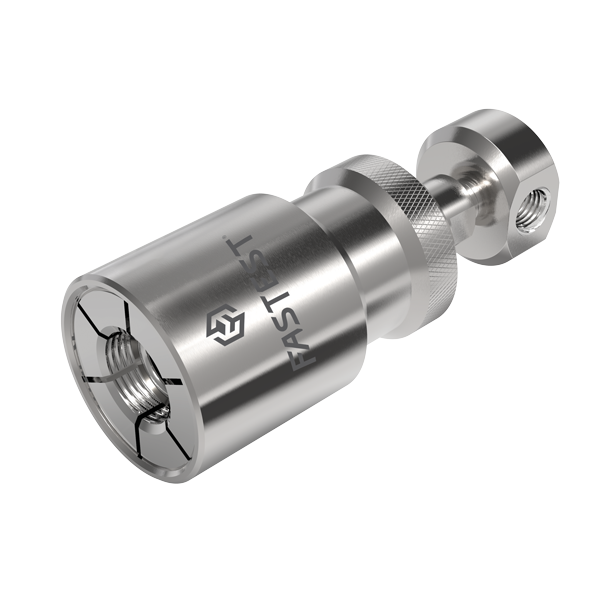
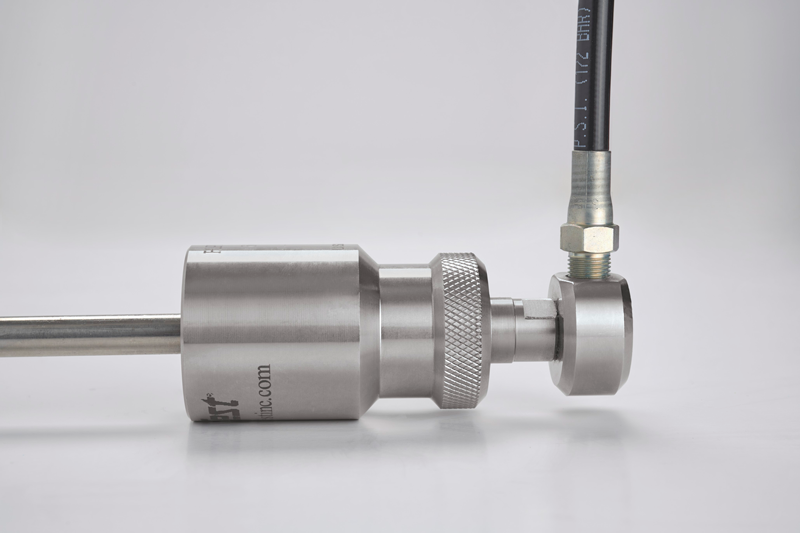
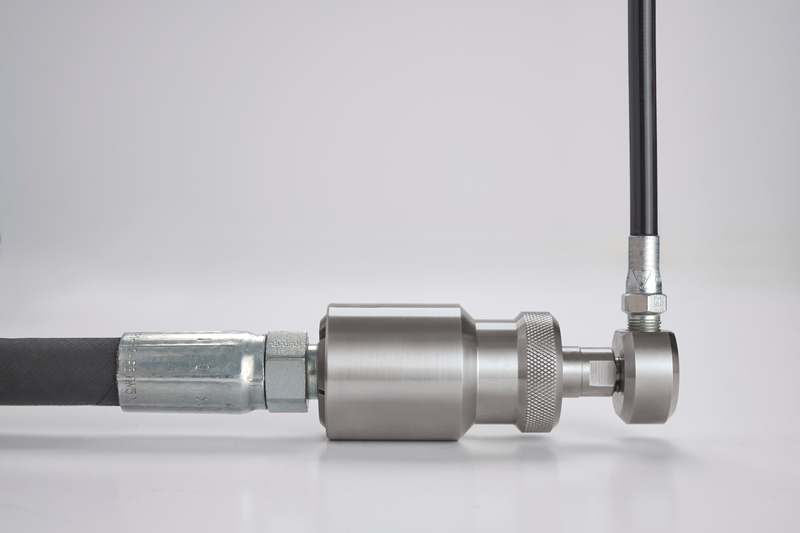
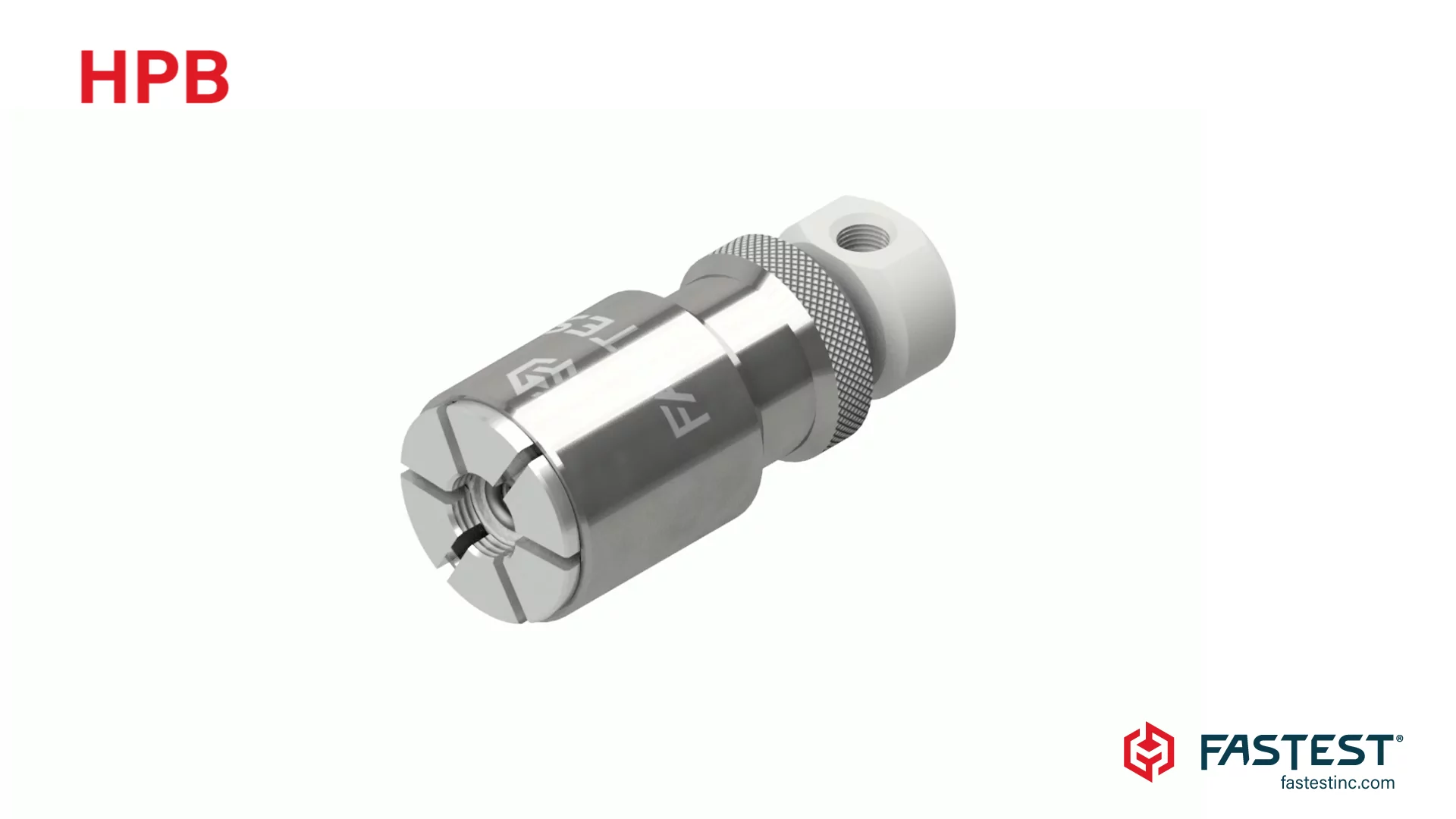
- Sleeve actuated connectors.
- Fast, safe and repeatable connections to external threads and compression type fittings.
- Push the connector onto threads/fitting to connect, pull sleeve away from connection to disconnect.
- Collet design locks securely and will not allow disconnect under pressure.
HPB Datasheet: Click Here
HPB Operating Instructions: Click Here
HPB Main Seal Replacement: Click Here
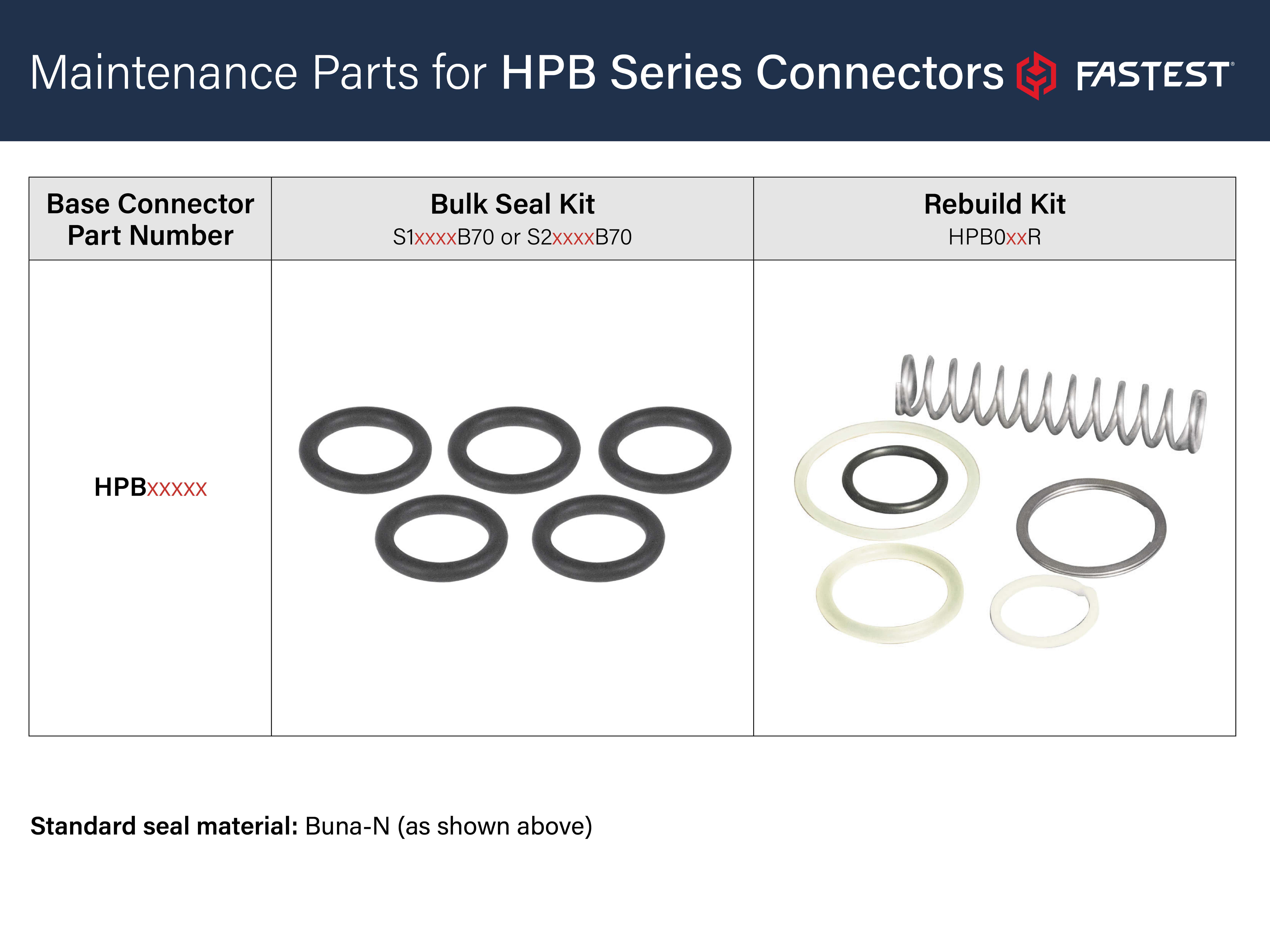
HPB Rebuild / Repair: Click Here
Product Video: Click Here
Similar Products
FE External Sealing Connection Tool
Pneumatic seal-only connector for fast leak-tight external connections to tubes and threads in automated and semi-automated test processes.
EZ Connect™ ZF | External Wide-Tolerance Connection Tool
Self-aligning external sealing tool for tube features with broad diameter tolerance and quick seal replacement.
60 External Thread Connection Tool
Sleeve-actuated grip-and-seal tool for quick repeatable connections to standard and custom external threads.
70 External Tube Feature Connection Tool
Custom sleeve-actuated grip-and-seal tool for formed tube features and other specialized external profiles.
FasMate® FX External High-Pressure Connection Tool
Collet-based grip-and-seal connector for threaded and custom external applications up to 5000 psi.
The 6,000 psi Push-On Connector That Will Not Disconnect Under Pressure
The FasTest HPB is a sleeve-actuated external connector rated from vacuum to 6,000 psi (414 bar). The operator pushes it onto a thread, fitting, or tube feature to connect, and pulls the sleeve away to release — a one-handed, tool-free action that takes seconds, with no thread tape, no sealant, and no wrenching.
The most important thing about the FasTest HPB is what it refuses to do. The collet design locks securely and will not allow disconnect under pressure: while the system is pressurised, the connection physically cannot be released. At 6,000 psi that is not a convenience feature but a safety interlock built into the geometry of the tool, and it removes the most serious failure mode in high-pressure testing — a connection coming apart while energised.
The FasTest HPB also has the broadest connection range of any connector in the FasTest line. It covers beaded, barbed, and formed tube features; NPT, BSPT/BSPP (G), and metric external threads; JIC 37° and 45° flares; JIC 37° and ORFS swivel nuts; compression fittings; and custom geometries. That means one tool handles the male side, the female swivel side, and tube features — a range that would otherwise require several dedicated connectors on the same bench.
Within FasTest’s external high-pressure range, the HPB sits above the FasMate® FX at 5,000 psi and below the TwistMate® MET at 10,000 psi. Its defining characteristics are the sleeve actuation and the locked-under-pressure collet, which suit benches where connections are made and broken constantly and where operators frequently have only one hand free.
The Problem the FasTest HPB Solves
High-pressure test benches face a set of problems that ordinary threaded fittings handle badly:
- Disconnection under pressure is the worst-case failure: At 6,000 psi a connection that comes apart while energised is a serious hazard to the operator and the equipment. Relying on procedure and operator discipline to prevent it leaves the risk in place.
- Threading is slow, and the bench is busy: Wrenching a fitting on and off for every test consumes time that compounds across a shift, and it wears the threads on parts that are often finished goods.
- Connection types vary constantly: A fluid power bench sees male threads, male flares, female swivel nuts, tube features and compression fittings, often within the same batch. Matching a dedicated connector to each type multiplies tooling and slows changeovers.
- Operators rarely have two free hands: Holding a hose or an assembly in position while threading a fitting with a wrench is awkward, and awkward handling at high pressure is its own risk.
The FasTest HPB answers each of these: the collet will not release under pressure, connection is a one-handed push with no tools, and a single connector covers twelve connection types spanning threads, flares, swivel nuts, tube features, and compression fittings.
Key Features
Collet Design Locks Securely — No Disconnect Under Pressure
The FasTest HPB’s collet locks the connection and will not allow it to be disconnected while the system is under pressure. This is the feature that defines the product: rather than depending on the operator to verify the system is depressurised before releasing, the tool makes the unsafe action mechanically unavailable. On a bench running at up to 6,000 psi, designing that constraint into the connector removes a category of accident rather than mitigating it.
Sleeve Actuated Connection
The FasTest HPB is sleeve actuated, which is what makes both the speed and the safety lock possible. The sleeve controls the collet, so a single component governs engagement and release — and because the sleeve cannot retract the collet while the connection is pressurised, the same mechanism that makes connection fast is what prevents unsafe disconnection.
Push to Connect, Pull the Sleeve to Disconnect
Connection is a straightforward push: the operator pushes the FasTest HPB onto the thread, fitting, or tube feature and it engages. Disconnection is pulling the sleeve away from the connection. Both actions are one-handed and require no tools, which matters on a bench where the other hand is often holding a hose or supporting an assembly.
Fast, Safe, Repeatable Connections Across a Broad Range
Because the connection is made by pushing rather than threading, it takes the same few seconds every time and does not vary with operator torque or technique. The FasTest HPB’s connection range then extends that consistency across twelve connection types — tube features, external threads, flares, swivel nuts, compression fittings, and custom geometries — so a mixed-fitting bench gets the same fast, repeatable connection regardless of what comes down the line next.
Technical Specifications
| Specification | Detail |
|---|---|
| Product Type | External, sleeve-actuated high-pressure connector for threads, tube features, and compression fittings. |
| Connects To | Beaded tube | barbed tube | formed tube | JIC 37° swivel nut | ORFS swivel nut | NPT external | BSPT/BSPP (G) external | JIC 37° flare | metric external | 45° flare | compression fitting | custom. |
| Max Pressure Rating | Vacuum to 6,000 psi (414 bar). |
| Actuation Method | Sleeve. |
| Actuation Type | External tube / threads. |
| Connect / Disconnect | Push the connector onto the thread or fitting to connect; pull the sleeve away from the connection to disconnect. One-handed, no tools. |
| Safety | Collet design locks securely and will not allow disconnect under pressure. |
| Thread Sealant | None required — the connector seals on its own seal element rather than on tape or pipe dope. |
| Related Products | FasMate® FX — external high pressure to 5,000 psi with lever, thumb valve, or pneumatic actuation; TwistMate® MET — external manual twist to 10,000 psi; Series 60 — external threaded to 750 psi; Series 70 — external tube features to 750 psi; FE — external seal-only to 500 psi. |
| Target Industries | Fluid power and hydraulics, aerospace, and general high-pressure component testing. |
| Documentation | HPB datasheet, operating instructions, main seal replacement, and rebuild/repair instructions, plus a product video. |
Where the FasTest HPB Is Used
Hydraulic Hose and Tube Assembly Testing
Hose and tube assemblies carry male fittings, female swivel nuts, and formed tube ends, and every assembly is proof tested before it ships. The FasTest HPB connects to all of those in one tool at up to 6,000 psi, with a push-on connection that keeps pace with production and a collet that cannot be released while the assembly is still pressurised.
Fluid Power Component Testing
Valve bodies, manifolds, cylinders, and fittings are tested at pressures where a disconnection would be dangerous. The FasTest HPB’s locked-under-pressure collet makes it well suited to this work, and its broad connection range covers the variety of port and fitting types a fluid power bench encounters.
Mixed-Fitting Test Benches
Where a single bench has to handle male threads, flares, swivel nuts, tube features and compression fittings, the FasTest HPB replaces a drawer of dedicated connectors with one tool — reducing changeover time, tooling inventory, and the chance of an operator reaching for the wrong connector.
Aerospace and High-Pressure Component Testing
Aerospace fluid and hydraulic components require high-pressure validation with strict handling requirements. The FasTest HPB provides a fast, tool-free, sealant-free connection at up to 6,000 psi, with the safety of a collet that will not release under pressure.
FasTest HPB vs. a Threaded Test Fitting
| Threaded Test Fitting | FasTest HPB | |
|---|---|---|
| Disconnect Under Pressure | Possible if loosened — relies on procedure | Collet locks — will not disconnect under pressure |
| Connection Time | Wrench on, wrench off each cycle | Seconds — push on, pull sleeve off |
| Hands Required | Two hands plus a wrench | One-handed, no tools |
| Connection Coverage | One fitting per thread or feature type | Twelve connection types in one tool |
| Thread Wear | Repeated threading wears finished parts | Push-on connection — no threading |
| Consumables | Tape or sealant every connection | None |
| Pressure Capability | Limited by thread engagement | Vacuum to 6,000 psi (414 bar) |
| Repeatability | Varies with operator torque | Consistent connection every cycle |
Frequently Asked Questions
Q: What is the FasTest HPB?
A: The FasTest HPB is a sleeve-actuated external connector for threads, tube features, and compression fittings, rated from vacuum to 6,000 psi (414 bar). It connects with a push and releases by pulling the sleeve, and its collet will not allow disconnection while the system is under pressure.
Q: Can the FasTest HPB be disconnected under pressure?
A: No — and that is deliberate. The collet design locks securely and will not allow disconnect under pressure, so the connection cannot be released while the system is energised. At 6,000 psi this removes the most serious failure mode in high-pressure testing.
Q: How do you connect and disconnect the FasTest HPB?
A: Push the connector onto the thread or fitting to connect; pull the sleeve away from the connection to disconnect. Both actions are one-handed and require no tools, thread tape, or sealant.
Q: What does the FasTest HPB connect to?
A: Beaded, barbed, and formed tube features; NPT, BSPT/BSPP (G), and metric external threads; JIC 37° and 45° flares; JIC 37° and ORFS swivel nuts; compression fittings; and custom geometries — twelve connection types in a single connector.
Q: Can the FasTest HPB connect to both male and female fittings?
A: Yes. It covers male external threads and flares as well as female JIC 37° and ORFS swivel nuts, plus tube features and compression fittings — which is what allows one tool to serve a bench handling both sides of a fitting.
Q: What is the maximum pressure rating of the FasTest HPB?
A: Vacuum to 6,000 psi (414 bar).
Q: How does the FasTest HPB compare to the FasMate FX?
A: Both are external high-pressure connectors with similar connection coverage. The HPB is sleeve actuated, rated to 6,000 psi (414 bar), and its collet will not allow disconnect under pressure. The FasMate® FX uses a split collet with lever, thumb valve, or pneumatic actuation, is rated to 5,000 psi (345 bar), and is available with ICON™ intelligent connection technology. The choice usually comes down to actuation method and whether ICON™ seal verification is needed — contact FasTest to confirm the right fit for your application.
Q: How does the FasTest HPB compare to the TwistMate MET?
A: The HPB is sleeve actuated and rated to 6,000 psi; the TwistMate® MET is manually twisted and rated to 10,000 psi (689 bar). Choose the HPB for faster push-on connection within its range, and the MET when test pressure exceeds 6,000 psi.
Q: Does the FasTest HPB need thread tape or sealant?
A: No. It seals on its own seal element rather than on tape or pipe dope, so there is no consumable to apply between parts and nothing introduced into the assembly under test.
Q: What industries use the FasTest HPB?
A: Fluid power and hydraulics, aerospace, and general high-pressure component testing — particularly hose and tube assembly proof testing and mixed-fitting test benches where connection types vary constantly.